Wangechi Mutu: Kenya’s Visionary Voice in Global Art
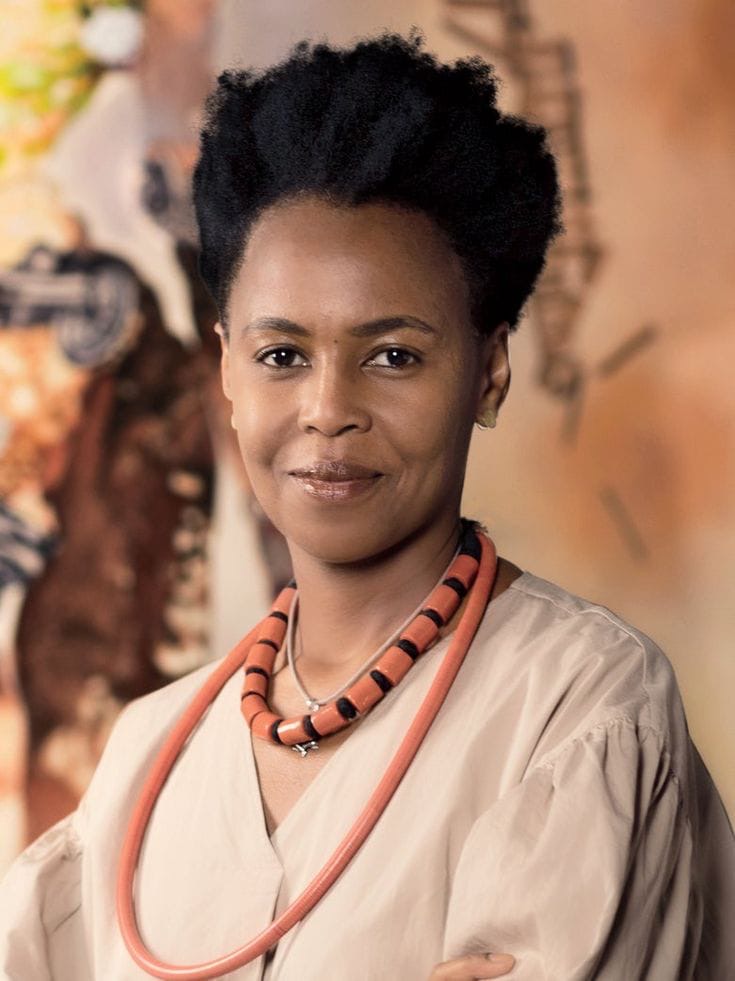
Kenyan-born Wangechi Mutu (b. 1972, Nairobi) has emerged as one of the most powerful voices in contemporary art, blending post‑colonial critique, feminist vision, environmental awareness, and Afrofuturist imagination across mediums from collage to sculpture and performance.
A Transnational Path: From Nairobi to New York
Raised in Nairobi, Mutu first gained access to drawing materials through her father’s paper import business. In 1989, she moved to Wales for secondary school, then studied art in New York, earning a BFA at Cooper Union (1996) and an MFA at Yale (2000). Since then, she has split her time between Nairobi and Brooklyn, rooting her work in both worlds.
Material as Message: Collage and Sculpture as Story
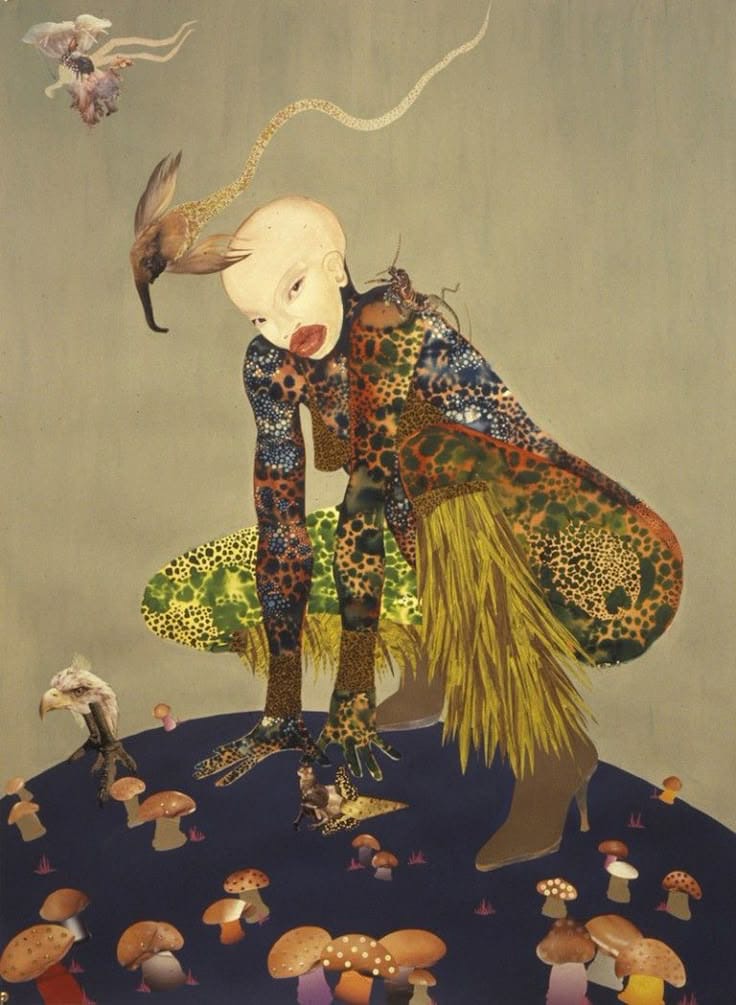
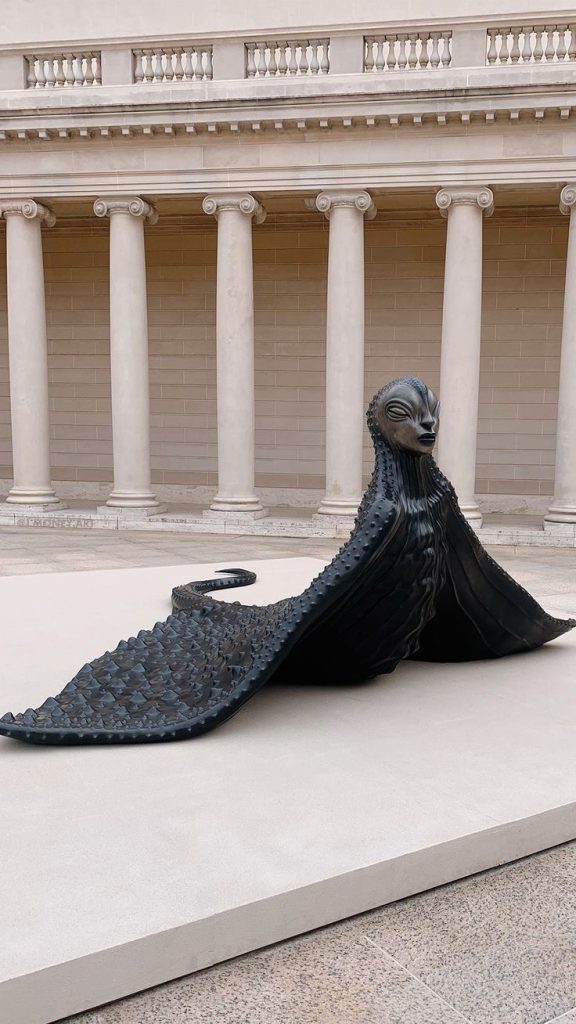
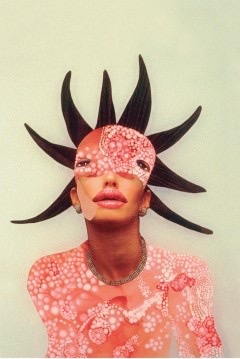
Mutu’s early acclaim came from her layered collage work: combining magazine clippings, medical diagrams, vibrantly painted Mylar, and synthetic hair into hybrid female figures that both seduce and unsettle. These figures confront stereotypes, patriarchy, and colonial legacies, representing Black femininity as fragmented yet powerful.
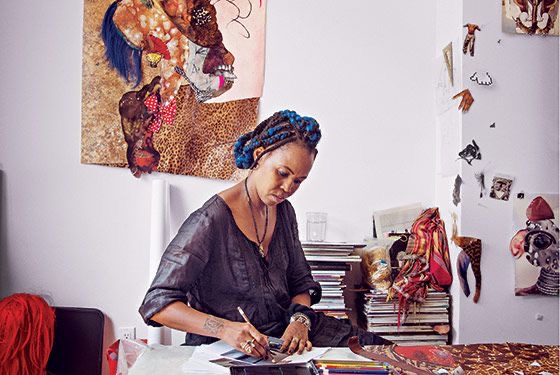
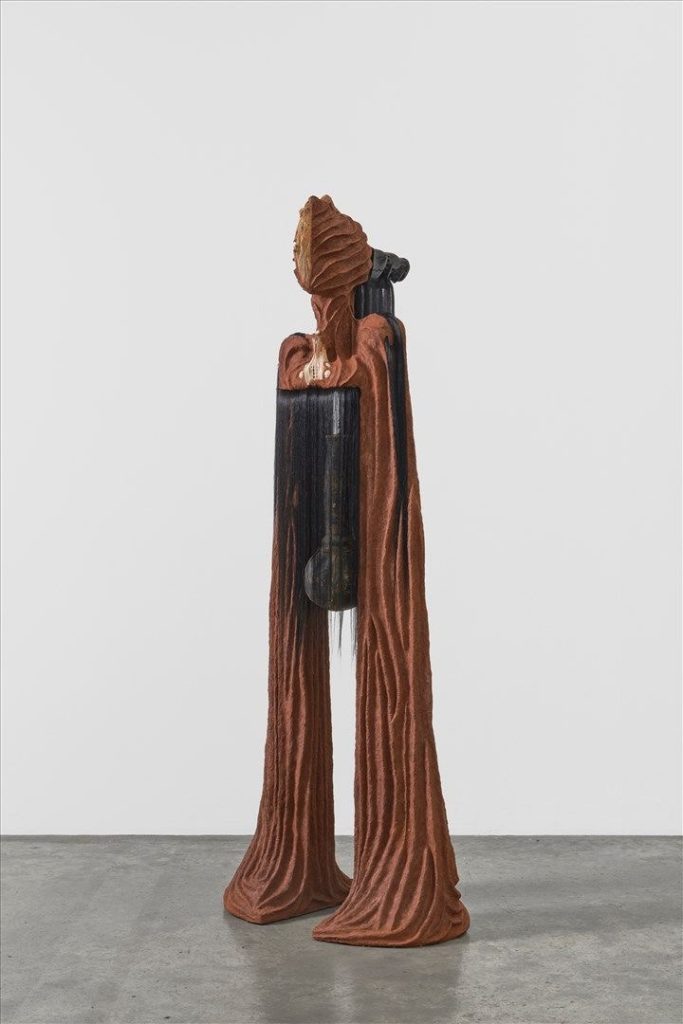
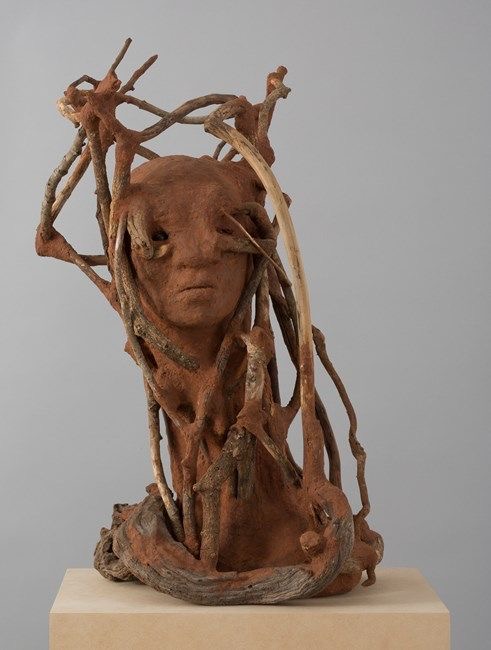
In 2015, returning to Nairobi expanded Mutu’s material palette: she began mixing Kenyan soil, tea leaves, wood pulp, shells, quartz, and volcanic ash into earth-based sculptures, which she calls a “porridge” that evokes ancestral memory, environmental fragility, and the strength of African women “rooted to the soil”.
Monumental Presence: Bronze Sentinels at the Met
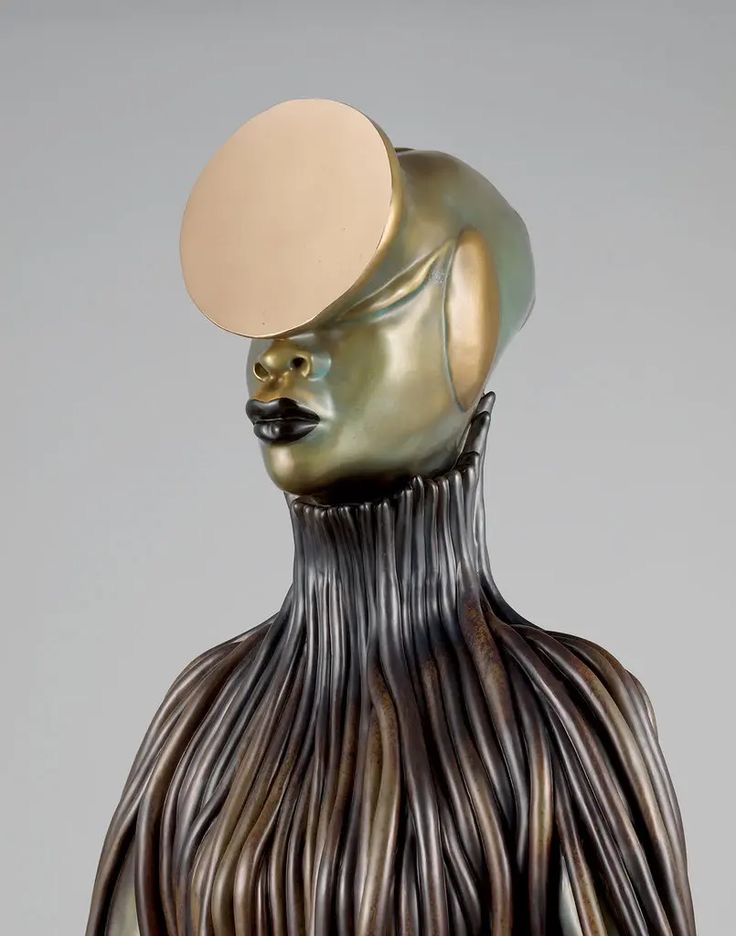
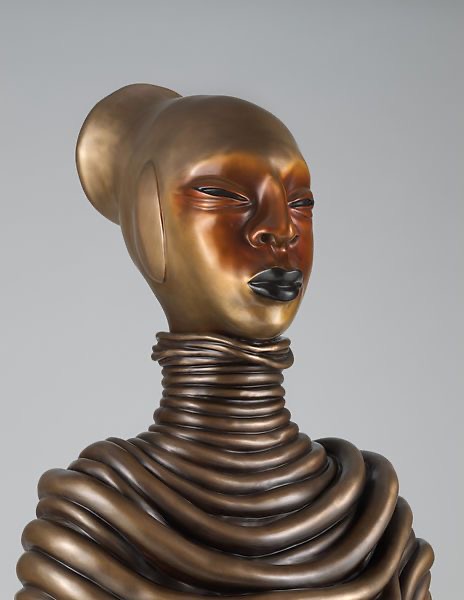
In 2019, Mutu became the first artist commissioned to install sculptures on the exterior façade of the Metropolitan Museum of Art. Her The Seated I–IV are seven‑foot bronze figures resembling caryatids, African futurist guardians bridging ancient motifs and speculative futures. The works remained on view for over a year and are now part of the Met’s collection.
Political, Spiritual, Personal: Black Soil Poems in Rome
In June 2025, Mutu opened Black Soil Poems at Rome’s Galleria Borghese, the first exhibition by a living female artist in that historic villa. About 25 works, many suspended from ceilings, explored colonial narratives, grief, and environmental agency using materials like coffee grounds and tea leaves. The show responded to Europe’s entangled history with Africa, and her loss of both parents
Themes Interwoven: Feminism, Climate, Identity
At its core, Mutu’s art interrogates how female bodies, African subjects, and natural landscapes are shaped and damaged by colonialism, consumerism, and patriarchy. But it also reimagines them as regenerative, decolonized, and futuristic. Her pieces challenge the objectification of Black women and assert their agency as healers, protectors, and future builders.

The environmental dimension runs deep: her film The End of Eating Everything (2013) visualizes consumption in apocalyptic form, an unsettling allegory for humanity’s voracious impact on Earth. And her studio-based sculptures, particularly the Sentinel series (2016–present), use soil‑based media to root climate discourse in African land and liminal mythic figures.
Influence & Outreach: Africa’s Out!
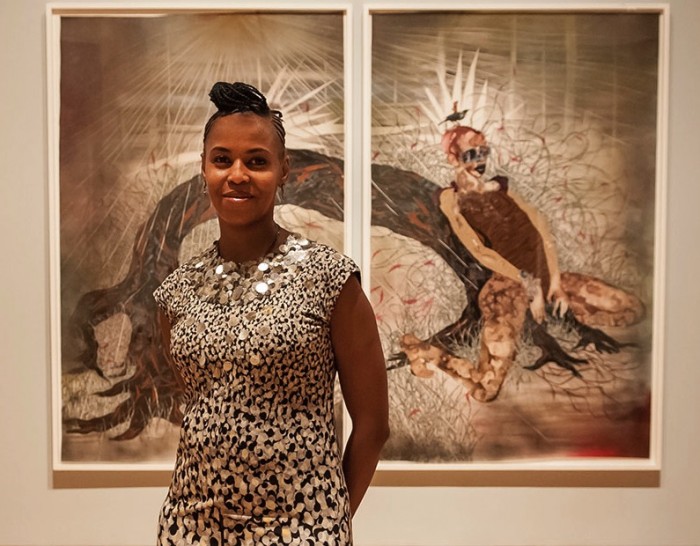
In 2014, Mutu founded Africa’s Out!, a Brooklyn‑based arts organization supporting African and diaspora artists whose work challenges dominant narratives. The program offers residencies, collaborations, and exhibitions, including projects in partnership with institutions like the Brooklyn Museum and Afropunk Festival
Global Reach & Recognition
Mutu’s work has been exhibited at major international venues: MoMA, Tate Modern, Centre Pompidou, Nasher Museum at Duke, the 56th Venice Biennale (2015), Zeitz MOCAA (Cape Town), Storm King Art Center, and New Museum’s 2023 mid‑career survey (her first full solo by that institution). She has received accolades, including Deutsche Bank’s Artist of the Year (2010), United States Artist Fellowship (2014), and Smithsonian American Art Museum Contemporary Artist Award.
Why Mutu Matters Today
Wangechi Mutu’s art is urgent It thoughtfully explores the depths of history while brilliantly envisioning the possibilities of the future. She occupies global institutions, museums, galleries, and biennials as spaces for decolonial reflection and radical possibility.
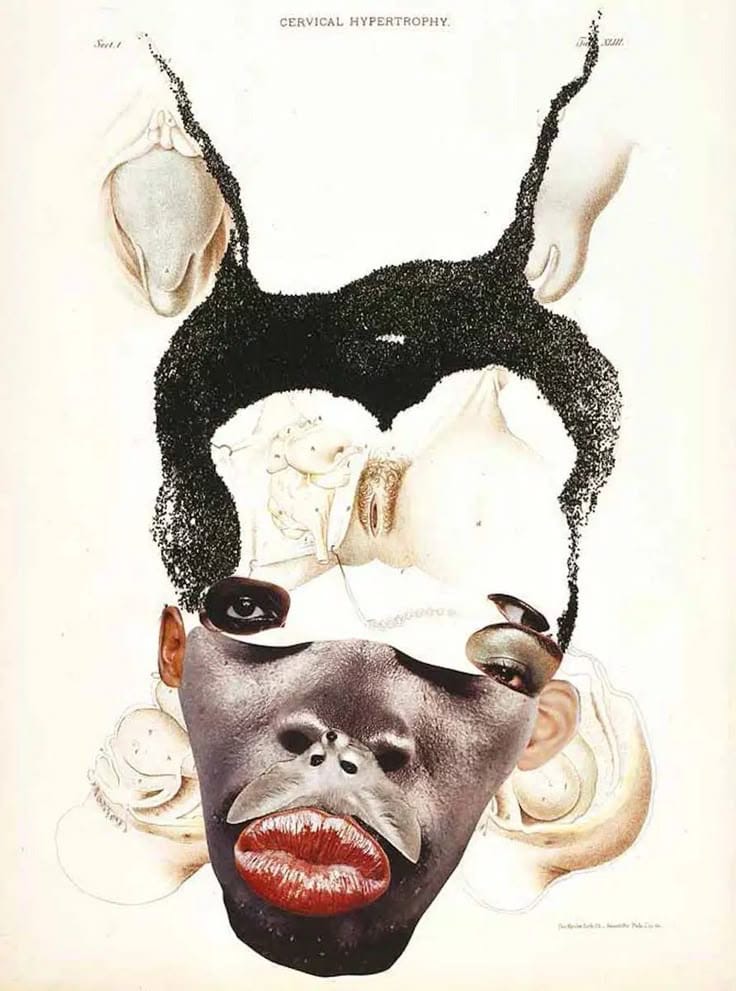
Her aesthetic, grotesque yet beautiful, futuristic yet rooted, counters erasure by asserting that African women are central characters in visual history.
Mutu’s work is a call: to remember, to resist, to heal, and to re-envision humanity’s future through an African feminist lens.
Final Thought
Wangechi Mutu is an incredible artist. She is a world-builder. Through media, myth, material, and memory, she presents figures who stand tall, fearless, and hybrid, acting as guardians for the next age of African art and Afro-imagined futures.