SayHerName Movement Gains National Momentum as Calls Grow to Address Violence Against Black Women
June 2015 — Across the United States, a powerful new rallying cry is echoing through streets, campuses, and online platforms: #SayHerName. What began as a focused attempt to draw attention to the often-overlooked stories of Black women impacted by police violence is rapidly transforming into a national movement.
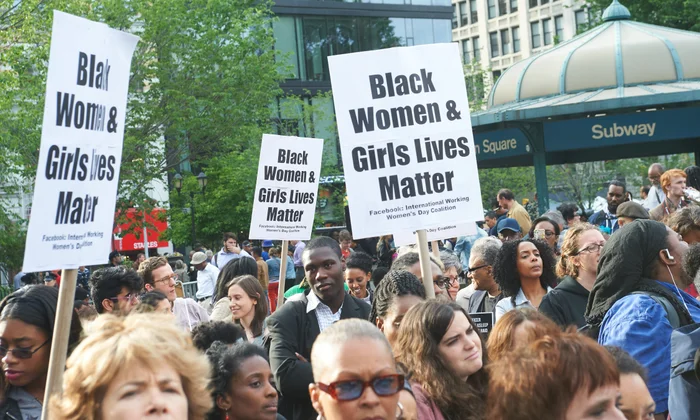
This week alone, demonstrations have taken place from New York to Chicago to Oakland, with activists demanding that the names and experiences of Black women and girls—many of whom have been killed, brutalized, or disappeared with little media attention—be brought to the forefront of the national conversation on policing.
A Spotlight on Stories Too Long Ignored
While public attention over the last year has largely centered on the deaths of Black men at the hands of police, organizers and scholars are pushing back against the narrative that Black women are unaffected by the same systemic issues. The #SayHerName campaign aims to correct that oversight.
This shift has been fueled by growing outrage over several cases that have come to symbolize the movement:
Sandra Bland
Last week, news of Sandra Bland’s arrest in Texas, after what appeared to be a routine traffic stop, spread rapidly across social media. Her subsequent death in a Waller County jail cell has raised serious questions—activists are calling for a deeper investigation and demanding answers about how a 28-year-old woman with no history of self-harm could end up dead three days after a traffic stop.
Rekia Boyd
In Chicago, the 2012 killing of Rekia Boyd by an off-duty police officer has resurfaced with renewed urgency after a judge dismissed the case earlier this year. Protesters say the lack of accountability in Boyd’s death exemplifies why Black women’s experiences often vanish from mainstream narratives about police brutality.
Other Lives, Same Pattern
Organizers emphasize that these cases are not isolated. They point to the deaths of Tanisha Anderson, Aiyana Stanley-Jones, and several others—names that, they argue, have not been spoken loudly enough or often enough.
A Movement Rooted in Urgency and Visibility
The campaign is being driven by activists, feminist scholars, and community organizers, many of whom argue that the trauma faced by Black women must be acknowledged as part of the broader national reckoning on policing.
Rallies this month have included moments where participants chant victims’ names, hold up signs bearing their faces, and read aloud personal stories shared by family members. Social media platforms are flooded with hashtags like #SayHerName, #SandraBland, and #JusticeForRekia, signaling a growing collective determination to ensure these women are not forgotten.
“If we don’t say their names, they disappear,” one organizer said during a protest in New York City earlier this week. “Black women are victims of police violence too—yet their stories are rarely centered. We’re changing that.”
Research Reveals a Disturbing Pattern
A new report released this spring by the African American Policy Forum and the Center for Intersectionality and Social Policy Studies highlights how Black women often experience forms of police violence that go underreported or misunderstood—from sexual violence during police encounters, to fatal use of force in mental health crises.
The report has sparked widespread conversation, adding academic weight to what many communities have long known: police violence against Black women is not an anomaly—it is systemic.
National Attention Rising, but Activists Say More Is Needed
As media outlets begin to cover #SayHerName more frequently, activists insist that attention alone is not enough. They are calling for:
- Policy changes addressing police interactions with women
- National data collection tracking violence against women of color
- Greater transparency and accountability from police departments
- Support for families struggling for justice
The urgency of the moment is palpable. Many believe that 2015 could be a turning point—if the nation is willing to listen.
A Growing Chorus
The energy behind #SayHerName shows no signs of slowing. Each protest grows larger; each story shared inspires more people to join the cause. Organizers say they will continue marching, chanting, and demanding recognition until every woman affected by police violence—past or present—has her name spoken and her story heard.
As one protester wrote on a cardboard sign held high outside a courthouse this week:
“If we don’t protect Black women, no one is safe.”
In 2015, the message is clear: we must #SayHerName.