The Trailblazing Legacy of Kofoworola Ademola: Nigeria’s Pioneer Educationist
Kofoworola Ademola was Nigeria’s first pioneer educationist. She defied racial and gender barriers by becoming the first black woman to graduate from Oxford University in 1935. Ademola graduated with a degree in English Language and Literature. Her amazing journey continues to inspire generations of women and educators worldwide.
Born in Lagos Nigeria, in the year 1913, to her parents Omoba Eric Olawolu Moore, a lawyer and a member of the Egba royal family and Aida Arabella, a trader and community leader. They instilled in her a passion for learning. Kofoworola Ademola attended St. Mary’s School, Lagos, before she travelled to England for higher education in 1930. From 1931 to 1935 she studied at St. Hugh’s College, Oxford. Whilst studying there she wrote a 21-page autobiography at the insistence of Margery Perham to challenge British stereotypes about Africans. She wrote of her childhood as a mixture of western cultural orientation and African orientation.
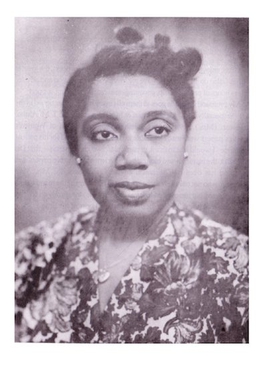
When she returned to Nigeria, she dedicated her life to teaching and education and she became a beacon of hope for girls and women. Kofoworola Ademola was the Principal of Queens College, Lagos from 1956 to 1963. During that time, she implemented innovative teaching methods and curricula, fostering a supportive environment for female students. Her commitment to education extended beyond the classroom, contributing to Nigeria’s education development and policy-making. She participated in women organizations such as YWMC.
In 1939 she married a Yoruba prince named Adetokunbo Ademola. They had five children together. Her husband’s work took the family to Warri and then later to Ibadan. While in Warri Ademola was a member of a women’s literary circle and was a teacher at Warri College. When she moved to Ibadan, she developed a friendship with Elizabeth Adekogbe of the Council of Nigerian Women and Tanimowo Ogunlesi of the Women’s Improvement Society. She was a member of the latter and was a bridge linking both organizations and a few others to form a collective organization.
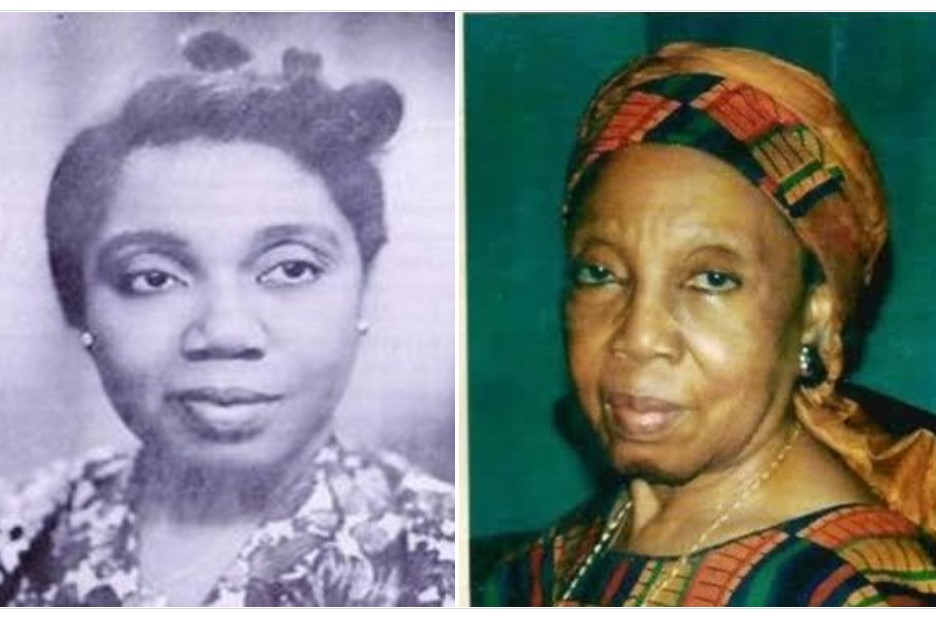
In 1958, the National Council of Women Societies was formed and she was chosen as the first president and became a board member of the International Council of Women. Ademola was a social worker, writer, teacher, and educator, and an advocate for women’s right, she co-founded two schools: The Girls Secondary Morden School, Lagos and New Era Girls’ secondary School, Lagos. She was a director of the board of trustees of the United Bank of Africa and a secretary of the Western Region Scholarship Board. She also wrote children books, many of them based on Western folklore. In 1959 she was appointed the Member of Order of the British Empire, receiving the award from Queen Elizabeth. Abubakar Tafawa Balewa’s government awarded her the honor of membership of the Order of the Federal Republic. A memorable refrain of her teaching was: ‘Brains have no sex … You can do as well and even better than some boys. You have brains too. And empower women, empower society. She died after a brief illness in 2002 at the age of 88.