Breaking Silence: The Fight for Women’s Rights in Gambia’s Genital Cutting Debate
In Gambia, the National Assembly has voted to advance a bill that would overturn a ban on female genital cutting, which is a practice where parts of a girl’s private parts are removed. Many women who went through this shared their stories at a meeting in the National Assembly. One woman was cut when she was 8 years old, while another found out on her wedding night that her private part was closed. This practice has led to infections and infertility for some women.
6th of February is the International Day of Zero Tolerance for Female Genital Mutilation. There are often various themes used to illustrate where the global battle again the practice of FGM stands at any given time. For example, the theme for 6th of February 2016 was “Achieving the new Global Goals through the elimination of Female Genital Mutilation by 2030.” However, current statistics casts doubt on the possibility of achieving this. It is estimated that at least 200 million girls and women alive today have undergone some form of FGM. If current trends continue, 15 million additional girls between ages 15 and 19 will be subjected to FGM by 2030. Therefore it seems that despite the best intentions of global civil society, the international community is still losing the war against FGM.
folukeifejola
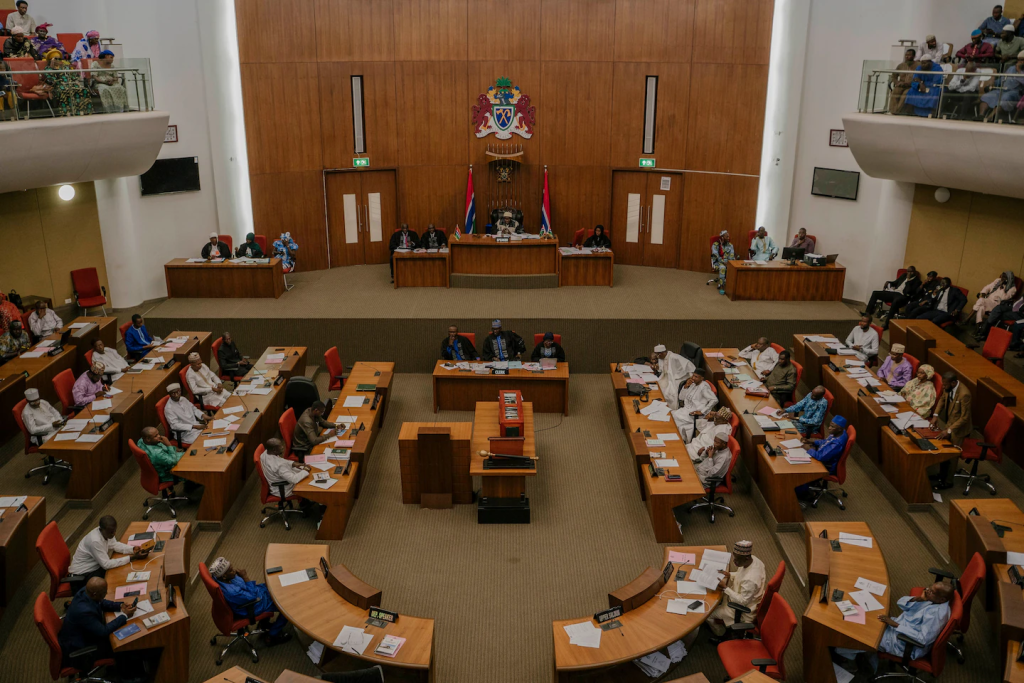
The women listened stoically as members of parliament — the vast majority of them men — pounded their gavels in support as Almameh Gibba, the lawmaker who introduced the bill, described it as intended to “uphold religious rights and safeguard cultural norms and values.” The ban on cutting, he said, represents a “direct violation of citizens’ rights to practice their culture.”
At the session, 42 of 47 parliament members voted to move the bill forward, teeing up months of national dialogue and possible amendments before a final vote on whether to revoke the 2015 ban. If Gambia ultimately moves forward, activists said they fear the decision — which the United Nations says would mark a global first — could lead other nations to follow suit.
Already, the United Nations says that about 75 percent of girls and women in Gambia between the ages of 15 and 49 have been subjected to genital cutting, which is often described by opponents as female genital mutilation, or FGM. Globally, more than 200 million women and girls are estimated to be survivors of female genital cutting, which can involve removing part of the clitoris and labia minora and, in the most extreme cases, a sealing of the vaginal opening. Medical experts say the procedures, which do not have medical benefits, can cause a range of short- and long-term harms, including infections, severe pain, scarring, infertility and loss of pleasure.

It is a rollback on women’s rights and bodily autonomy,” said Jaha Dukureh, a Gambian activist whose little sister died as a result of a botched procedure and who found out on her wedding night, at 15, that she had been sealed as a baby. “It is a rollback in terms of telling women what to do with their own bodies. This is all this is.”

As Dukureh was speaking to a journalist in the National Assembly, a former government official and proponent of the bill, Mai Ahmad Fatty, stopped to talk. He said that in Gambia, female circumcision, rather than female genital mutilation, is practiced. Dukureh told him that she knew best what had happened to her own body, and that it was mutilation.
Image: Jaha Dukureh, a Gambian activist usually based in New York, stands outside the National Assembly on Monday. She has been in Gambia for several months fighting a repeal of the FGM ban. Dukureh was a victim of FGM, and her younger sister died due to blood loss from a botched FGM procedure. (Carmen Yasmine Abd Ali for The Washington Post)
“You are denying [us] as women who have been through FGM … You are telling us that what we are saying is a lie.”
she said.
Gambia, which was carved out of Senegal during British colonial rule, is a country of about 2.5 million where news travels fast. And since last year, when three women were convicted of practicing female genital cutting, much of that news has focused on the practice, spawning a countrywide discussion about religion, culture, patriarchy, and reproductive health and sexuality.
One of Gambia’s most prominent imams, Abdoulie Fatty, paid the fines of the women who were convicted, saying that the practice was taught by the prophet Muhammad, and then launched a campaign to overturn the ban, leading to Gibba’s bill. There has been debate about the practice in Islam, but many Muslim leaders have condemned it, and in many Muslim-majority countries it is not widespread.
Outside the National Assembly on Monday, women and men holding signs that read, “Girls need love, not knives” squared off against Muslim clerics who were preaching to dozens of veiled girls from Islamic schools. They cheered as one cleric told them circumcision was justified by religion.

Inside the building, where only five of Gambia’s 58 lawmakers are women, the discussion Monday was dominated by men. Among the survivors in the audience was Sainey Ceesay, the founder of a nonprofit focused on destigmatizing infertility, who said she only recently decided to start talking about what she experienced at 8 years old. At that time, women had gathered her and a group of other girls at a house in Banjul, the capital, and used a razor to cut off her clitoris.
Ceesay, who said she suffered for years from trauma and infections and was unable to conceive, is still holding out hope that the ban will not be repealed. “At least as of today, FGM is still illegal in Gambia,” she said with a quiet sigh.

Fatty, the cleric whose support helped push the bill forward, said that he did not have a problem with those who choose not to practice cutting but added that Gambians should have the right to practice what has long been in their culture. Western ideals, he said, should not be imposed in the countries that do not share them.
Image: Imam Abdoulie Fatty, the cleric whose support helped push forward the bill to overturn the FGM ban, stands near the National Assembly on Monday. (Carmen Yasmine Abd Ali for The Washington Post)
Fatty leaned forward in his chair ahead of the session on Monday, growing animated as he explained that it was about following the teachings of the prophet, about purity and about reducing the likelihood of cancer. (Doctors say there is no basis for this claim.)
“It is something not to reduce feeling, but to control, to balance the feelings of a woman,” he said in an interview.
When asked to clarify whether he meant women have too much desire in the absence of cutting, he nodded his head and wagged a finger.
“Too much,” Fatty said. “Too much. We can say in sex, women’s power is more than men’s power. … Women can do sex longer than men. So that is why Islam came to balance. They can be together and their desire can be balanced.”
Far from parliament’s public stage, deeply personal debates are also playing out within communities and families across the country, often among women and sometimes exposing sharp generational divides. Many women note that because cutting often happens when girls are no older than in elementary school, they are never given a choice in the matter.
In one family living near Gambia’s southern border, a grandmother in her 60s who used to be involved in the traditional ceremonies for cutting said she still believed in the practice, noting that her three daughters had all been cut and never complained. She felt so strongly that when her granddaughter was young, she took her to be cut without permission from the girl’s mother.
Sitting at her feet, her granddaughter, now 20 and studying nursing, said she is fully aware of the negative consequences. “If it were in my power to stop FGM today, I would,” she said. Both women spoke on the condition of anonymity because of the sensitivity of the topic.
Mariama Gassama, a grandmother from a town about 20 miles outside of Banjul who said she had participated in circumcision ceremonies, said that while pleasure is still possible after cutting, the practice was necessary to ensure women do not “have too many feelings for men.”
Fatou Baldeh, an activist and FGM survivor who just days earlier had been honored at the White House, said she tries to “hold grace” for the women who continue to advocate for the practice, knowing many have not been educated and have only their own experience to go by.
But sitting in the parliamentary chambers Monday as she listened to the men debate, Baldeh said she was seething.
When one activist started wiping tears from her eyes with tissues, a lawmaker demanded that women who were crying leave the chambers, and the speaker agreed, asking them not to make a scene.
Baldeh said she wanted to scream listening to the men trivialize the pain women had experienced. But she resolved to stay in the chambers, knowing the importance of the women being present, forcing the men to look at them as they cast their votes.
“We have a right to cry,” she said. “But we knew the importance of staying. So we kept our tears in.”
It’s imperative to acknowledge the erosion of African values and traditions over the years, often supplanted by those of colonial powers and early traders. This phenomenon has left many Africans indoctrinated and rigid, absorbed in practices that undermine the dignity and rights of individuals. The recourse to new laws becomes essential in safeguarding victims against these injustices, yet when governments themselves flout human rights, they betray their people and bear responsibility for the resulting crimes and atrocities. Thus, there’s an urgent need for heightened awareness and education within local communities to combat the systemic oppression of women.
Gambia’s situation epitomizes this irony, with a male-dominated parliament debating against women’s rights while religious leaders, such as imams, assert the justification of harmful practices like female genital cutting under the guise of Islamic teachings. This reasoning, centered on the purported balance of sexual pleasure, is not only archaic but egregiously selfish, perpetuating the subjugation of women across Africa. In this dire landscape, Gambian and other African women find themselves without recourse, lacking the support structures necessary to challenge entrenched norms and seek liberation from oppressive traditions.
For Ghana and other African nations, addressing these issues requires a multifaceted approach. It entails not only enacting and enforcing laws that protect human rights but also fostering a cultural shift through comprehensive education and awareness campaigns. Empowering women to assert their rights and challenge harmful practices is paramount, as is holding governments and religious institutions accountable for their roles in perpetuating gender-based violence and discrimination. Only through concerted efforts can we hope to dismantle the systems of oppression that continue to plague our societies and truly uplift all members of our communities.
#GirlsNeedLoveNotKnives
Ashunter Lubega