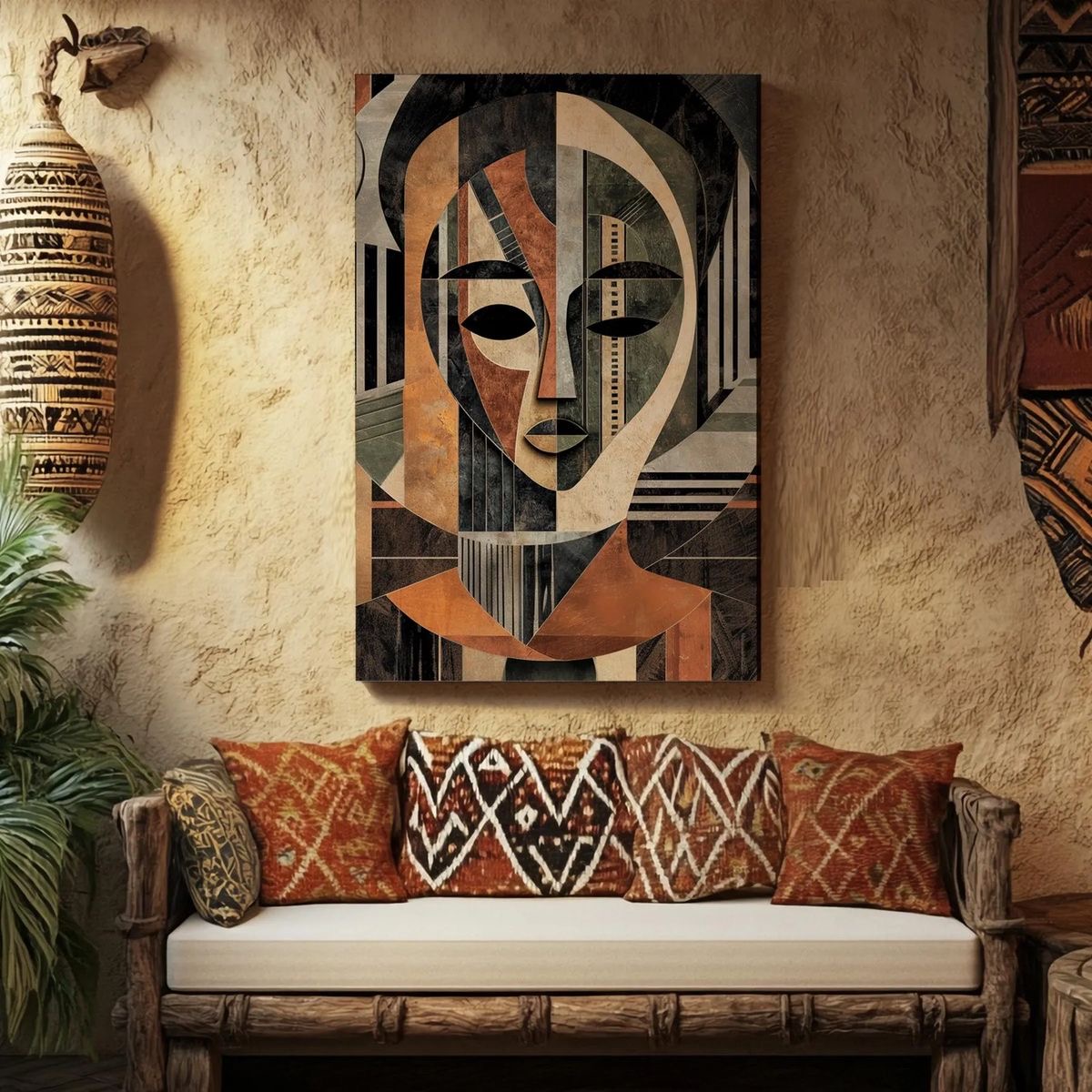
How to Infuse Your Space with the Richness of African Style
Have you ever walked into a room and immediately felt a sense of warmth, vitality, and soul? That intangible feeling is often the result of a space that tells a story. It’s a feeling that African interior design masters, a style not about recreating a single look, but about embracing a continent’s worth of energy, artistry, and spirit.
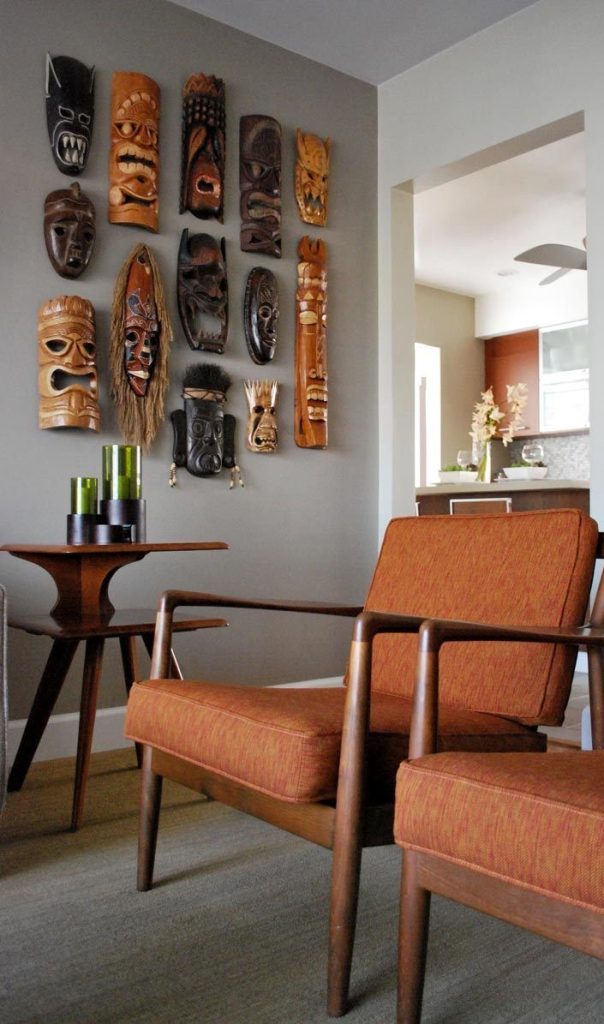
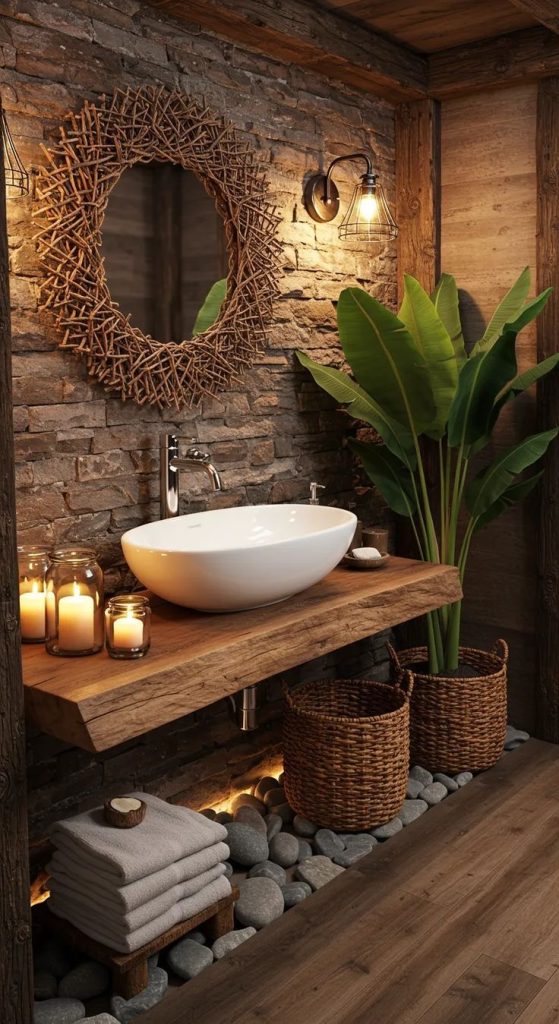
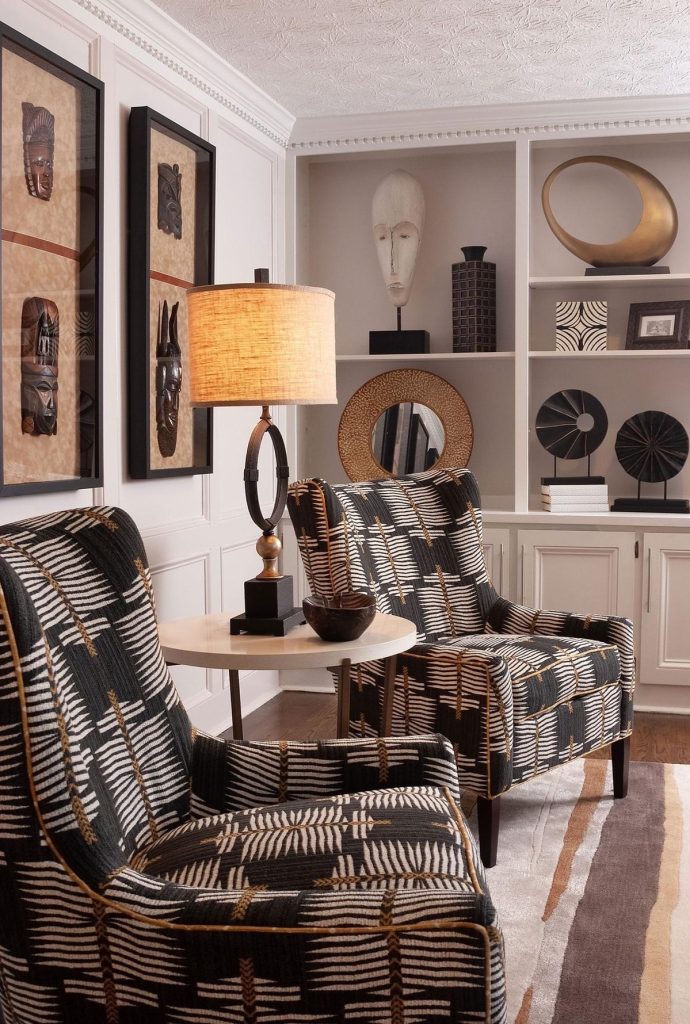
You don’t need to be African to fall in love with this aesthetic. It’s for anyone who wants their home to feel more connected, authentic, and alive. It’s about moving away from mass-produced decor and towards a home that is curated, personal, and full of meaning.
This is your guide to weaving that magic into your own space, no matter where you are in the world.
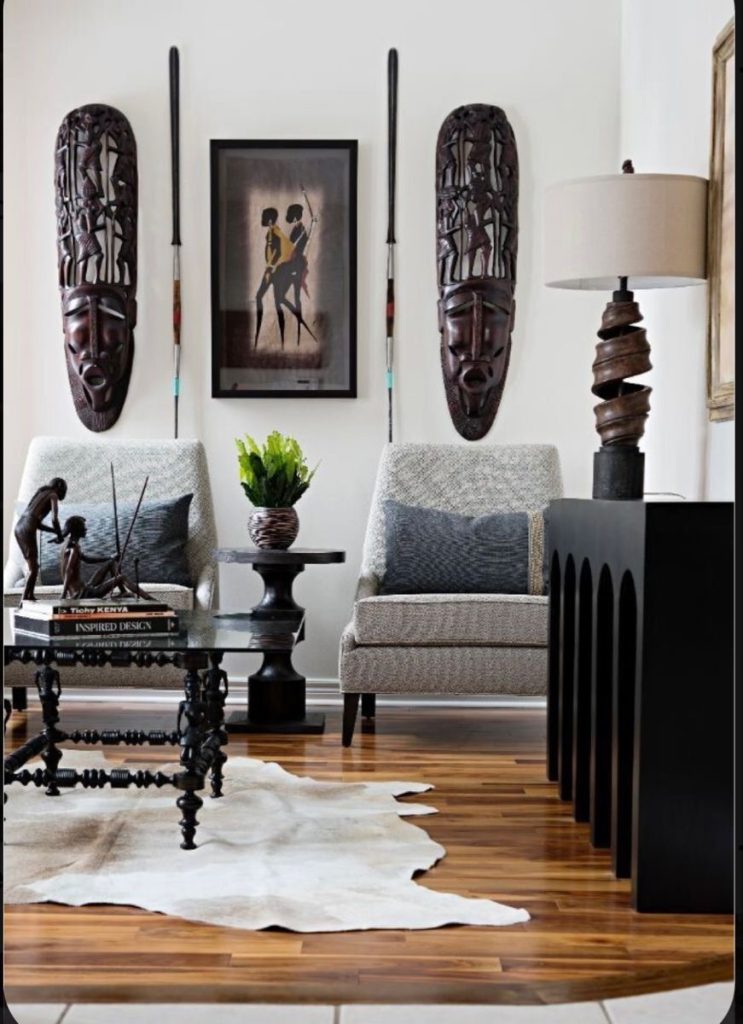
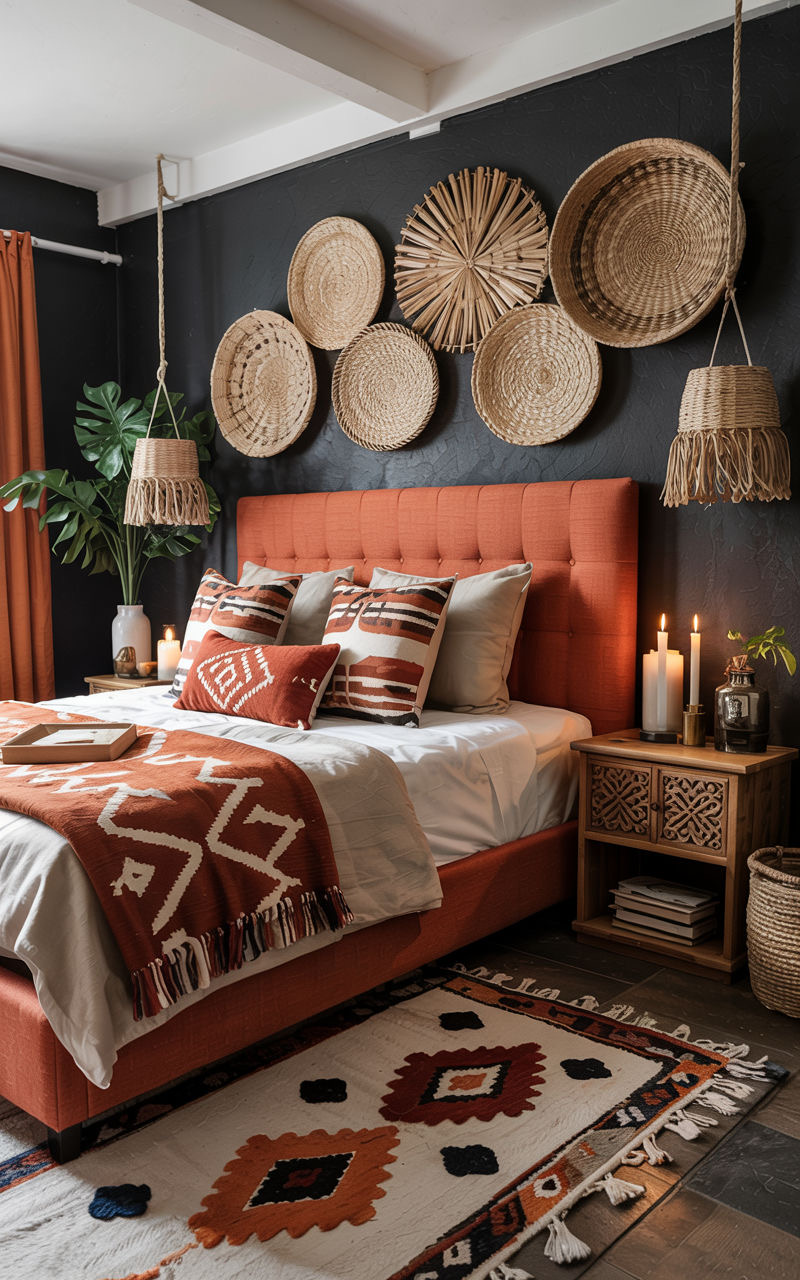
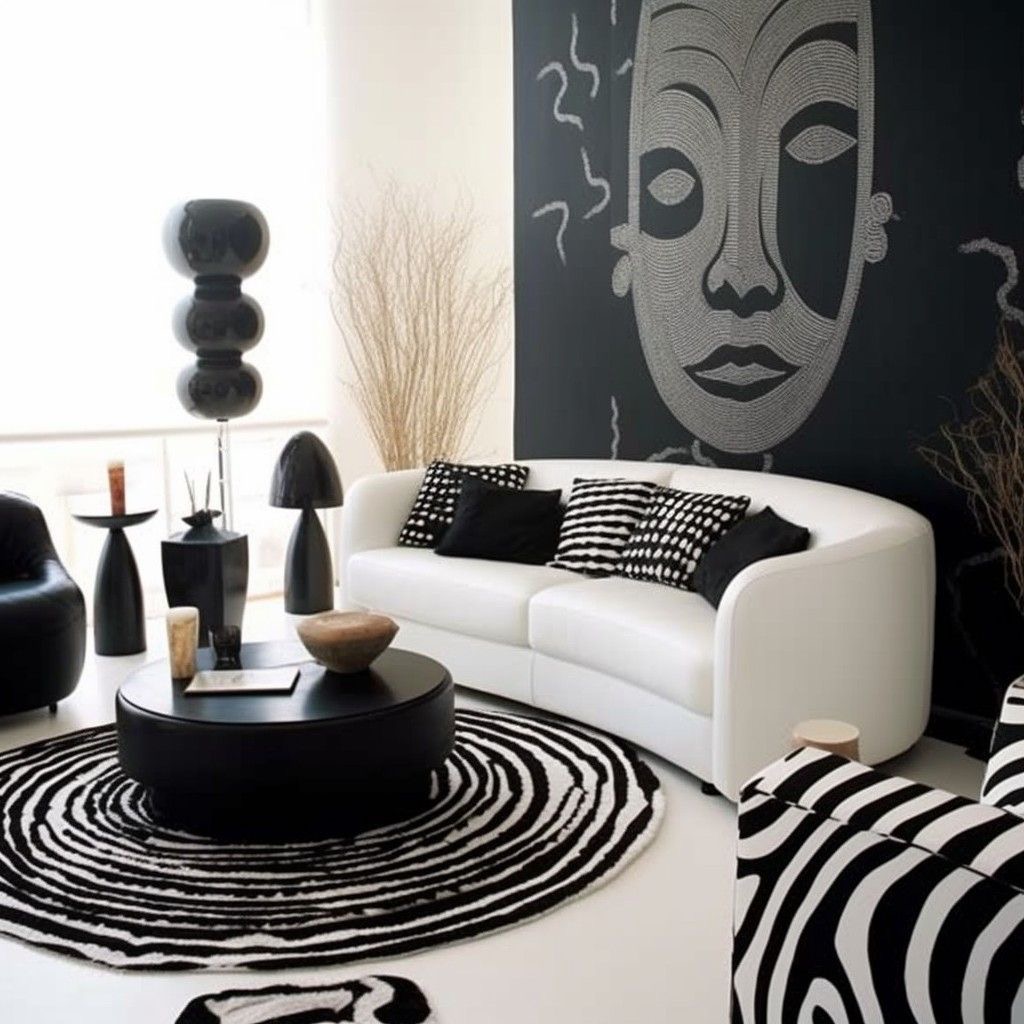
1. The Foundation: It All Starts with a Feeling
Before you buy a single thing, understand the why. African-inspired design is a mood. It’s about:
- Connection: To the earth, to community, to history.
- Warmth: Creating a space that feels inviting and nurturing.
- Vitality: Incorporating bold expressions and energy.
- Storytelling: Every piece has a purpose and a past.
Your goal isn’t to mimic a lodge or a museum exhibit. It’s to capture a feeling. Think earthy, textured, layered, and personal.
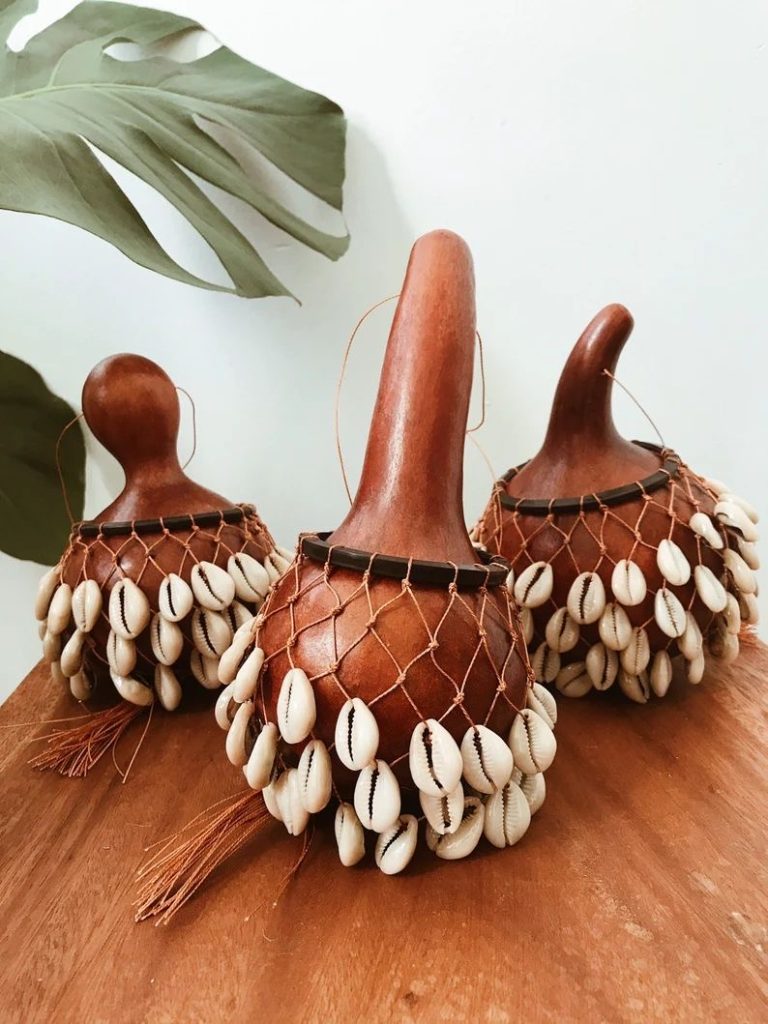
2. The Earth Speaks: Embrace a Natural Color Palette
Forget cold, sterile grays. The color story of the African continent is the most epic inspiration you can find. Look to the landscapes:
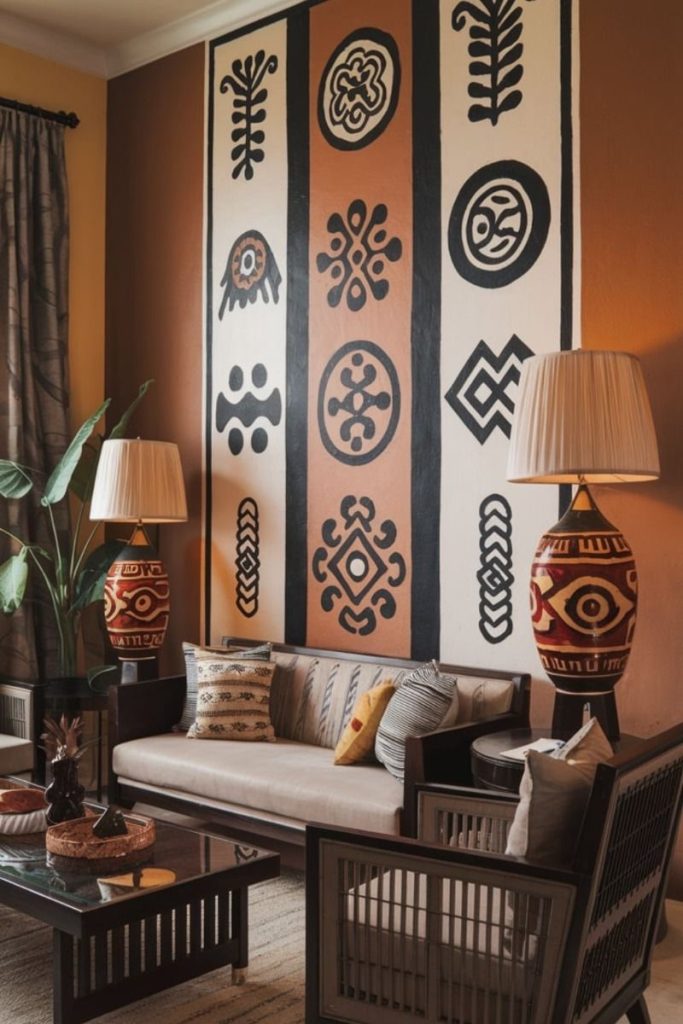
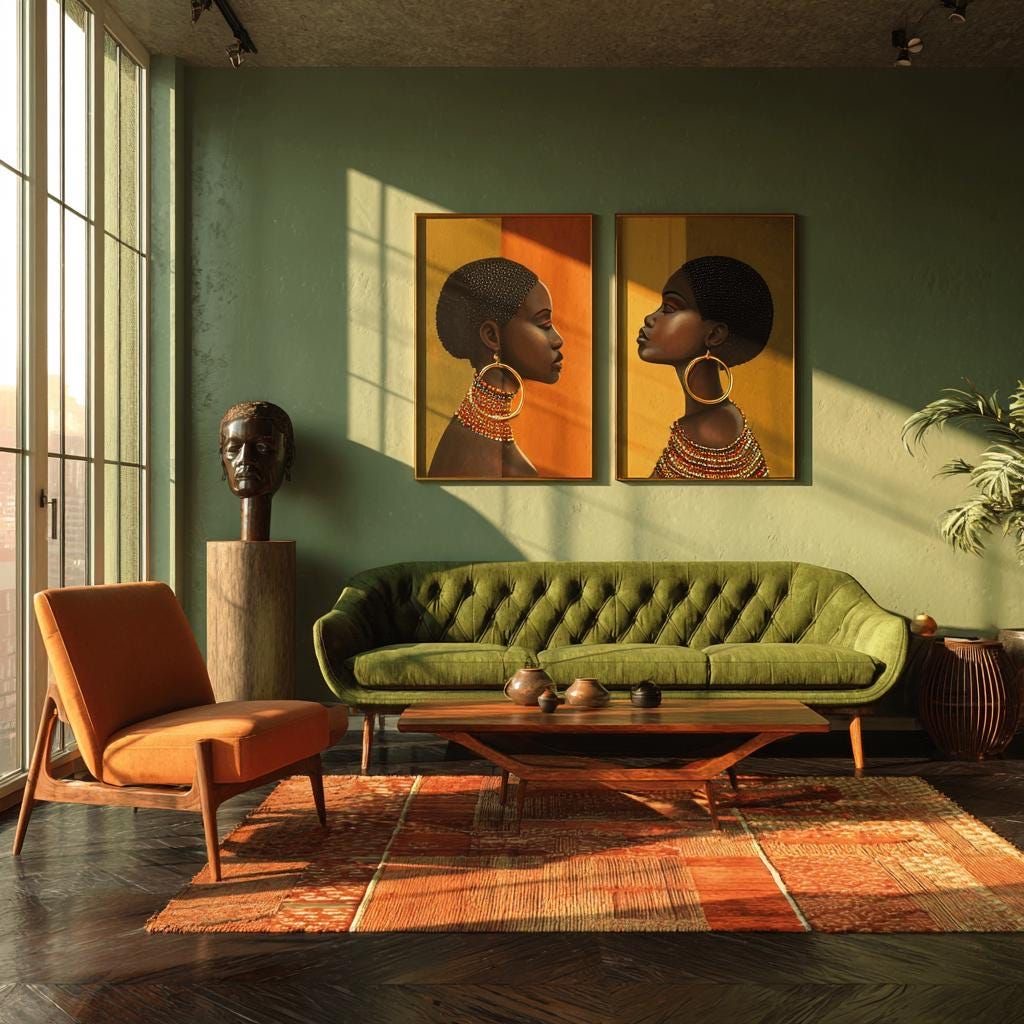
- The Savanna: Think warm, sunbaked hues, creamy beiges, sandy tones, soft browns, and dusty terracotta. These are your perfect neutral bases for walls and large furniture. They are calming, grounding, and incredibly versatile.
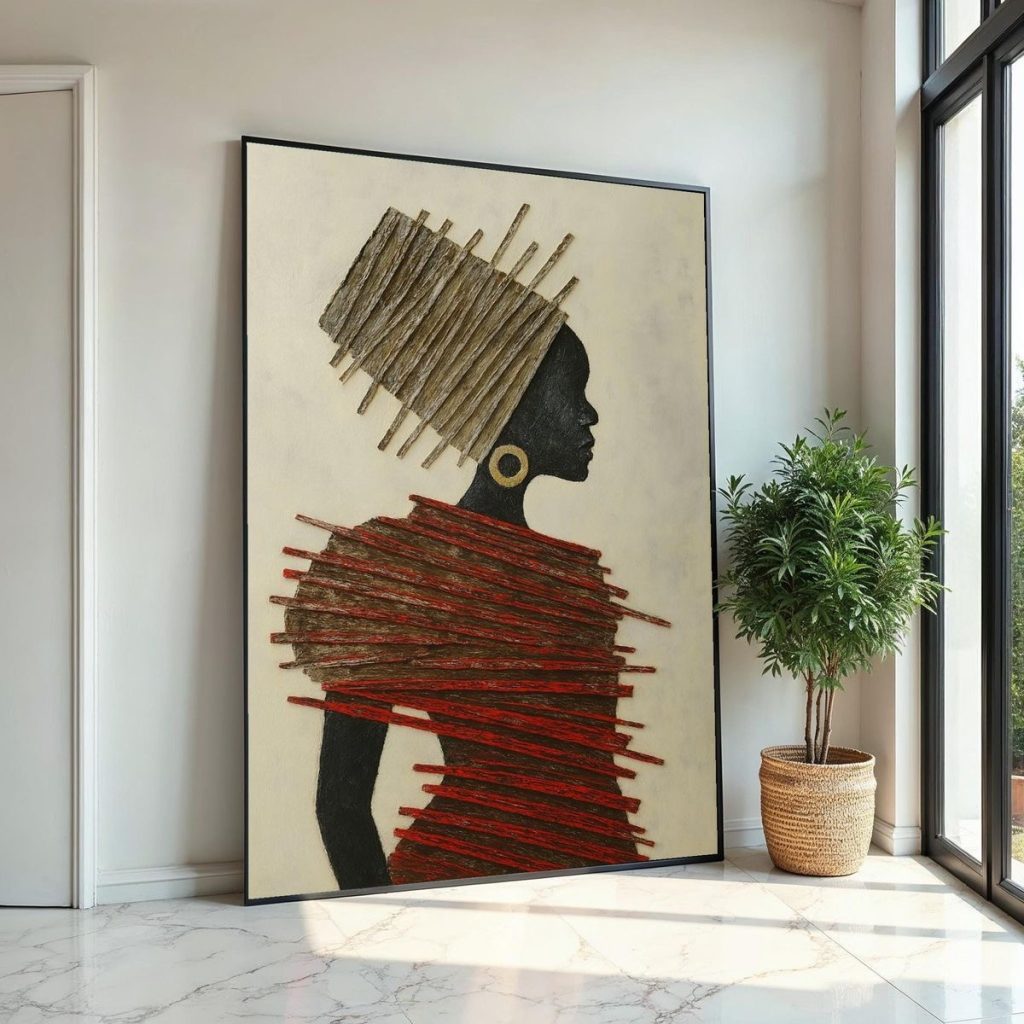
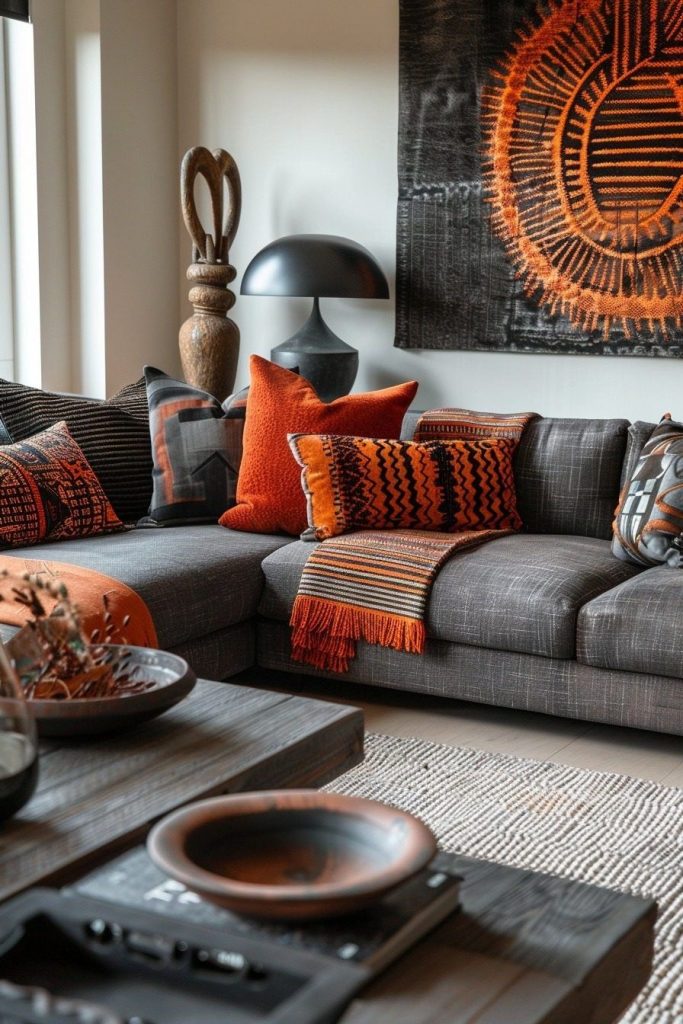
- The Sunsets: Don’t be afraid of color! Use accents of brilliant orange, deep magenta, and golden yellow. These are the colors of energy, joy, and celebration. A single wall, a large piece of art, or a vibrant throw pillow can bring a room to life.
- The Forests and Oceans: Introduce depth with shades of earthy green (like olive or sage) and cool blues (from ocean azure to deep indigo). These colors are serene and sophisticated.
Actionable Tip: Look at a photograph of an African landscape you love. Use a color picker app (like Adobe Color) to identify its main 3-5 colors. Use the neutrals for your big pieces and the brighter ones for your accents.
3. The Magic is in the Mix: Texture is Everything
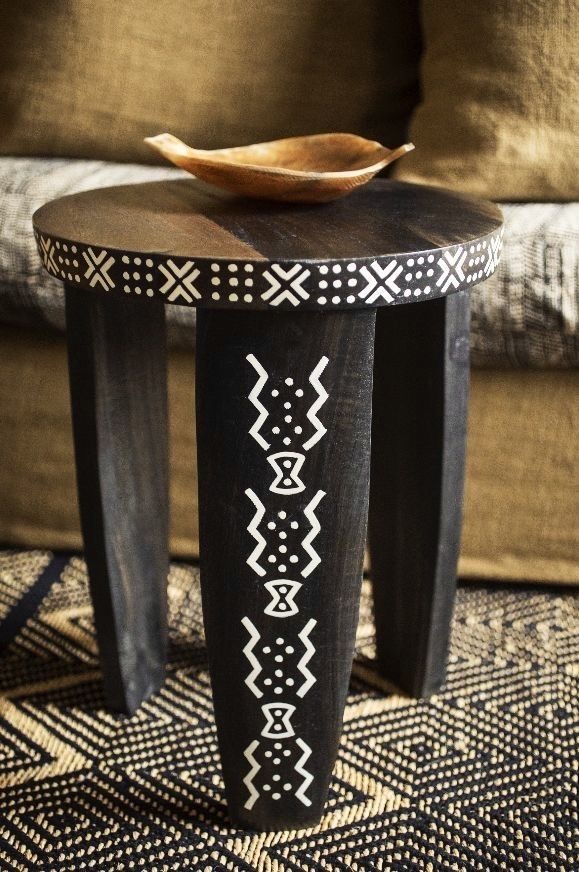
This is the single most important element. African design is deeply tactile. It’s about the rough against the smooth, the woven against the polished.
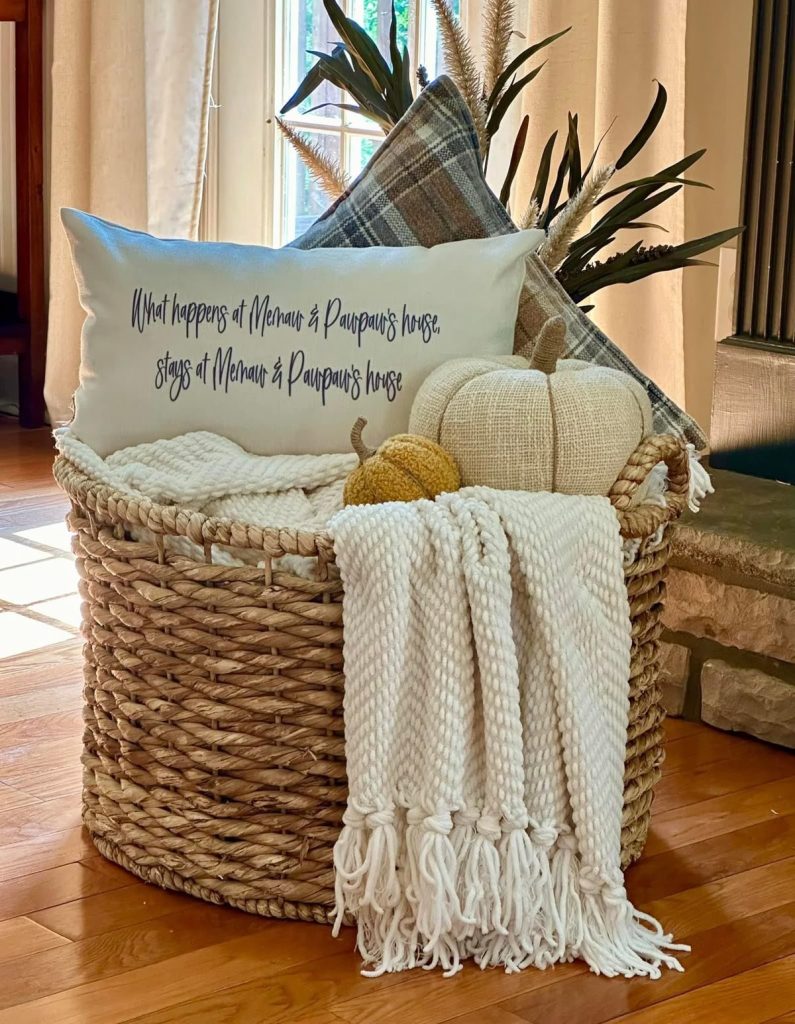
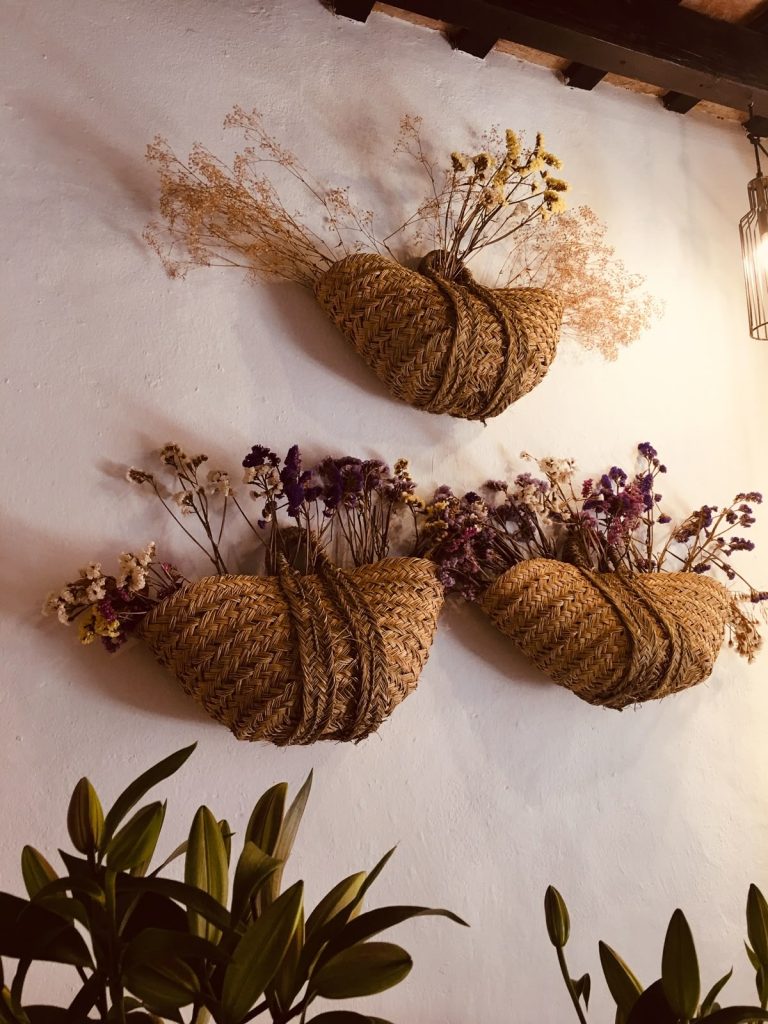
- Baskets are Your Best Friend: Beautifully woven storage baskets from places like Ghana (Bolga baskets) or Rwanda are both functional art. Use them to store blankets, magazines, or toys. They add instant texture and a handmade feel.
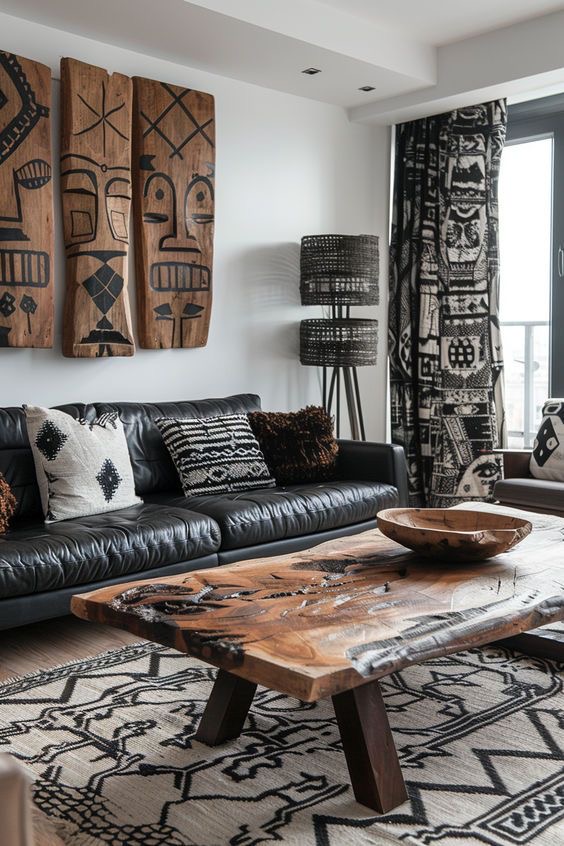
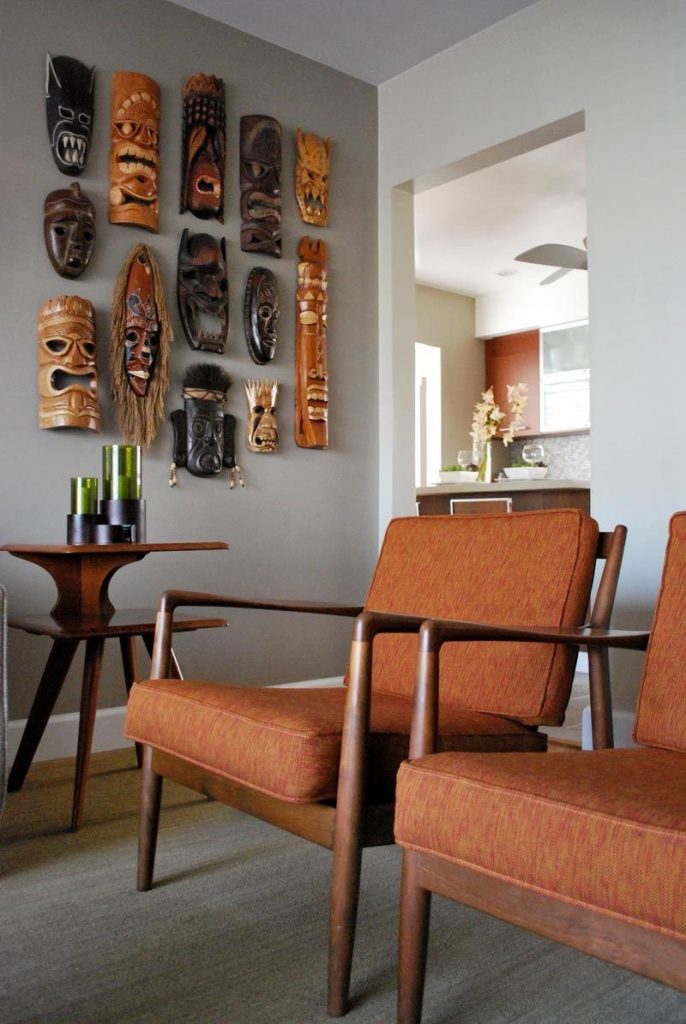
- The Power of Wood: Choose furniture and objects made from beautiful, natural woods with visible grain. Look for pieces that show the hand of the maker, a carved stool, a chunky wooden bowl, a side table with organic edges.
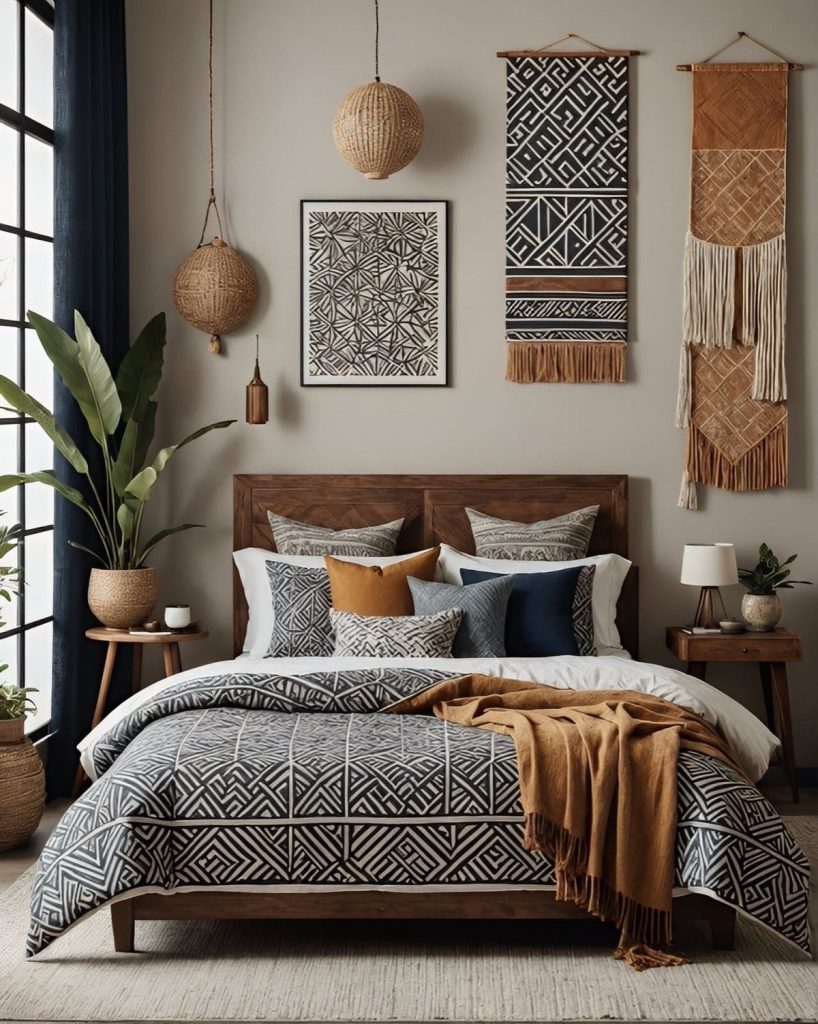
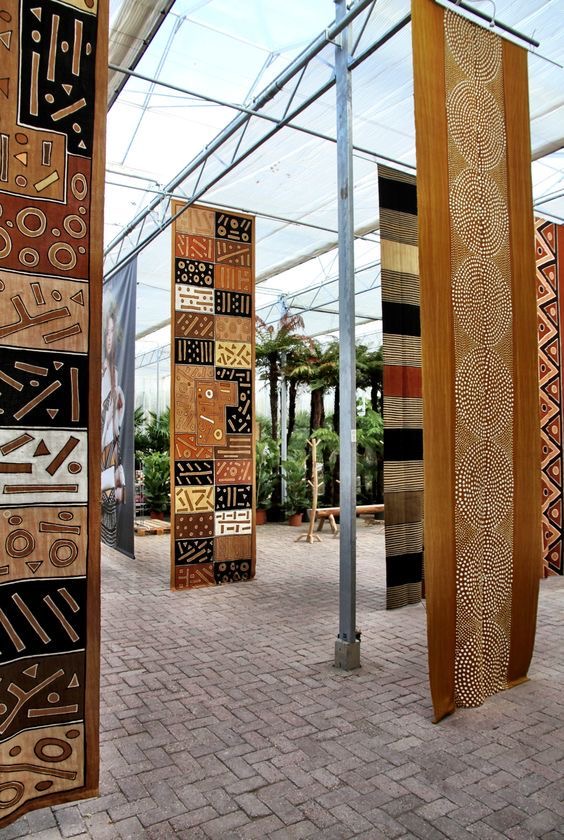
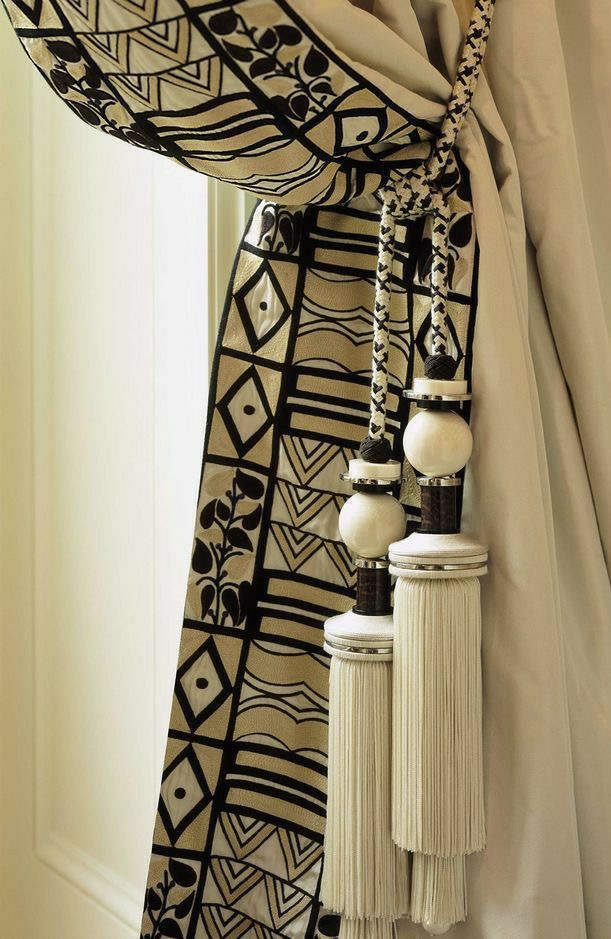
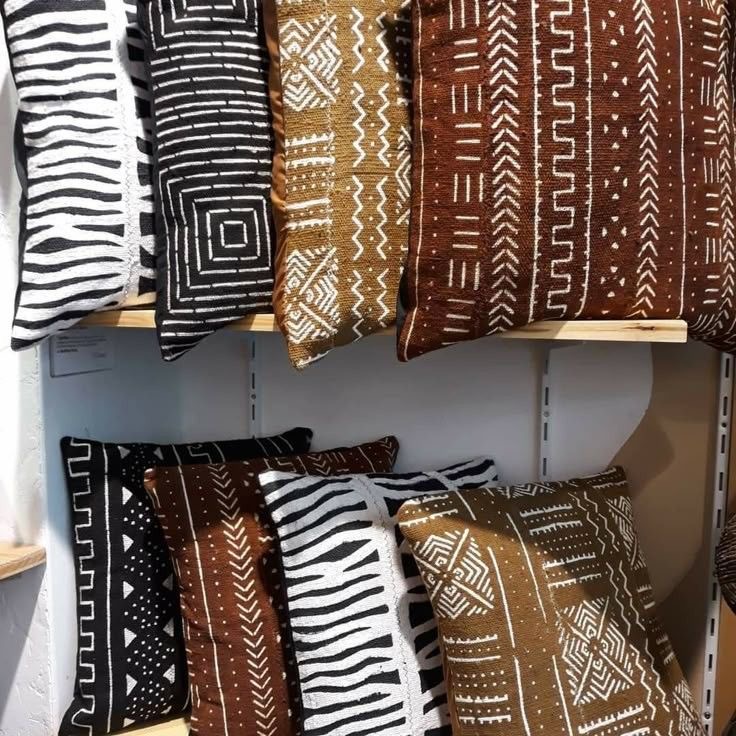
- Go Wild with Textiles: This is where you can have the most fun. Layer different textiles with abandon:
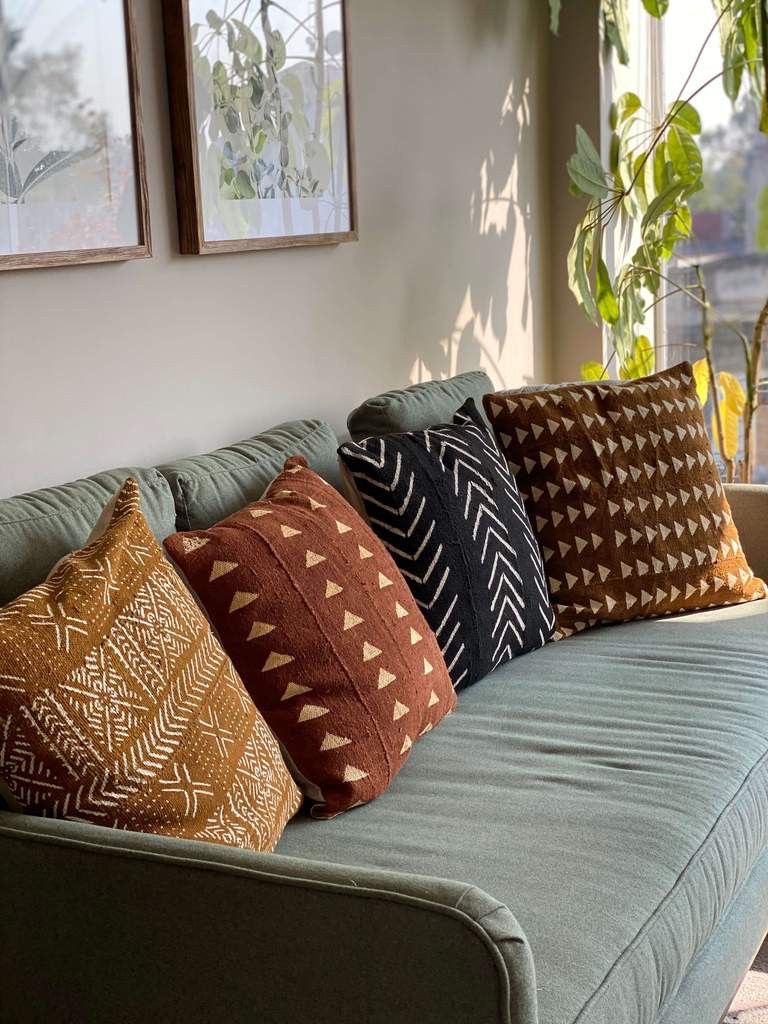
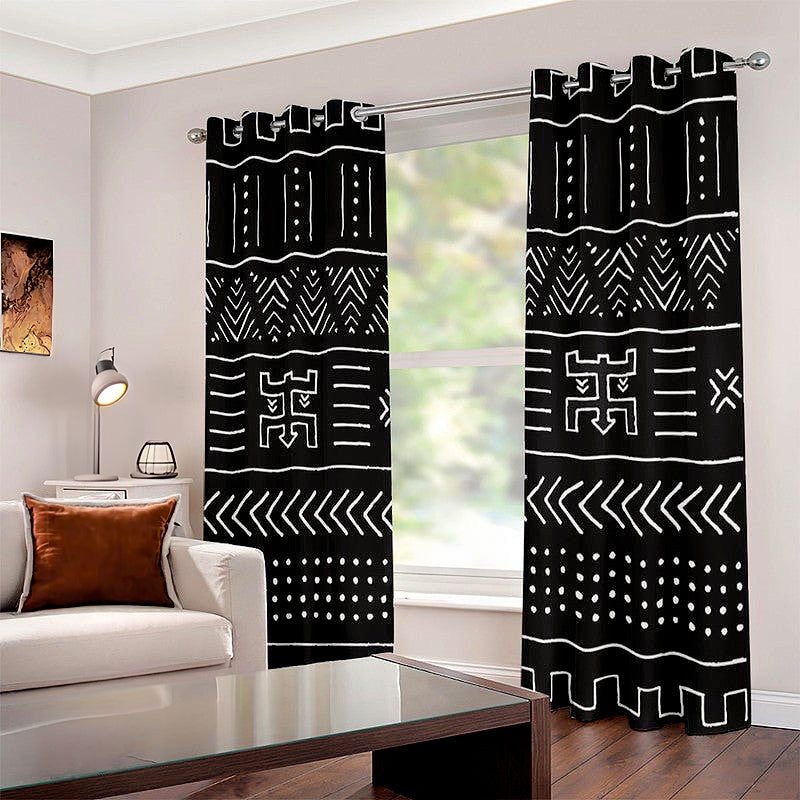
- A throw pillow in a mudcloth (Bogolanfini) pattern from Mali.
- A blanket with a geometric Kente-inspired design.
- A rug with a simple, minimalist pattern in a natural jute or wool.
The key is to mix patterns thoughtfully. Stick to a cohesive color palette so the different patterns feel curated, not chaotic.
4. The Soul of the Space: Curate with Meaning, Not Stuff
This style is the opposite of fast furniture. It’s about finding pieces you love and that have a story.
- Support Artisans: Seek out pieces made by hand. Every time you buy a hand-woven basket or a hand-carved bowl, you are supporting an artist and their tradition. Websites like Etsy, Novica, and The African Craft are fantastic places to start. Look for terms like “handmade,” “artisan,” and “fair trade.”
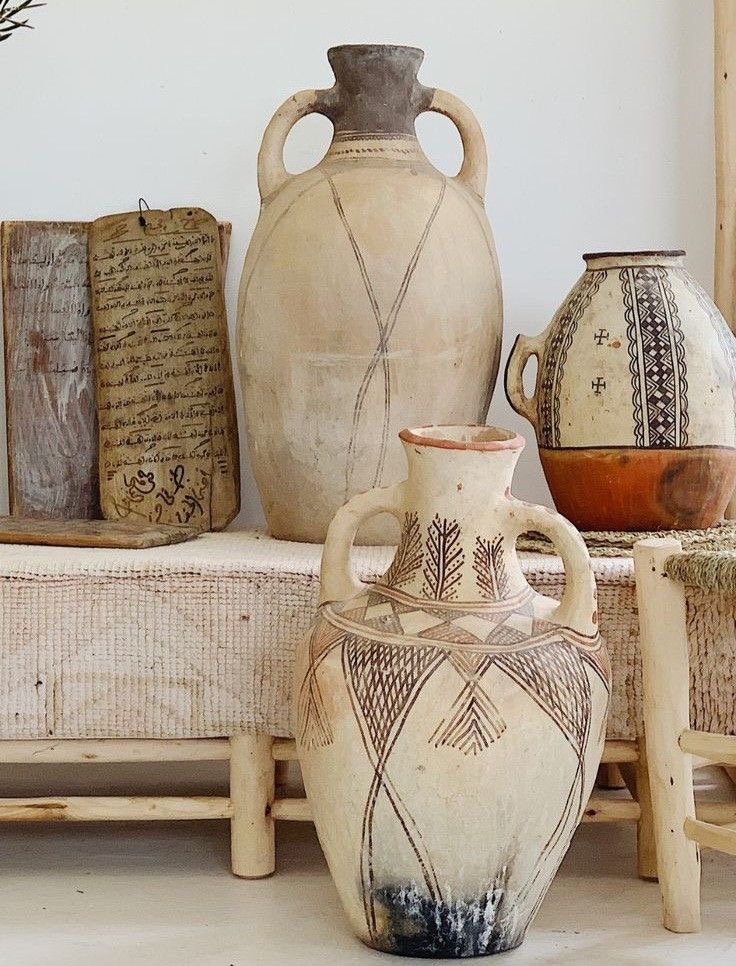
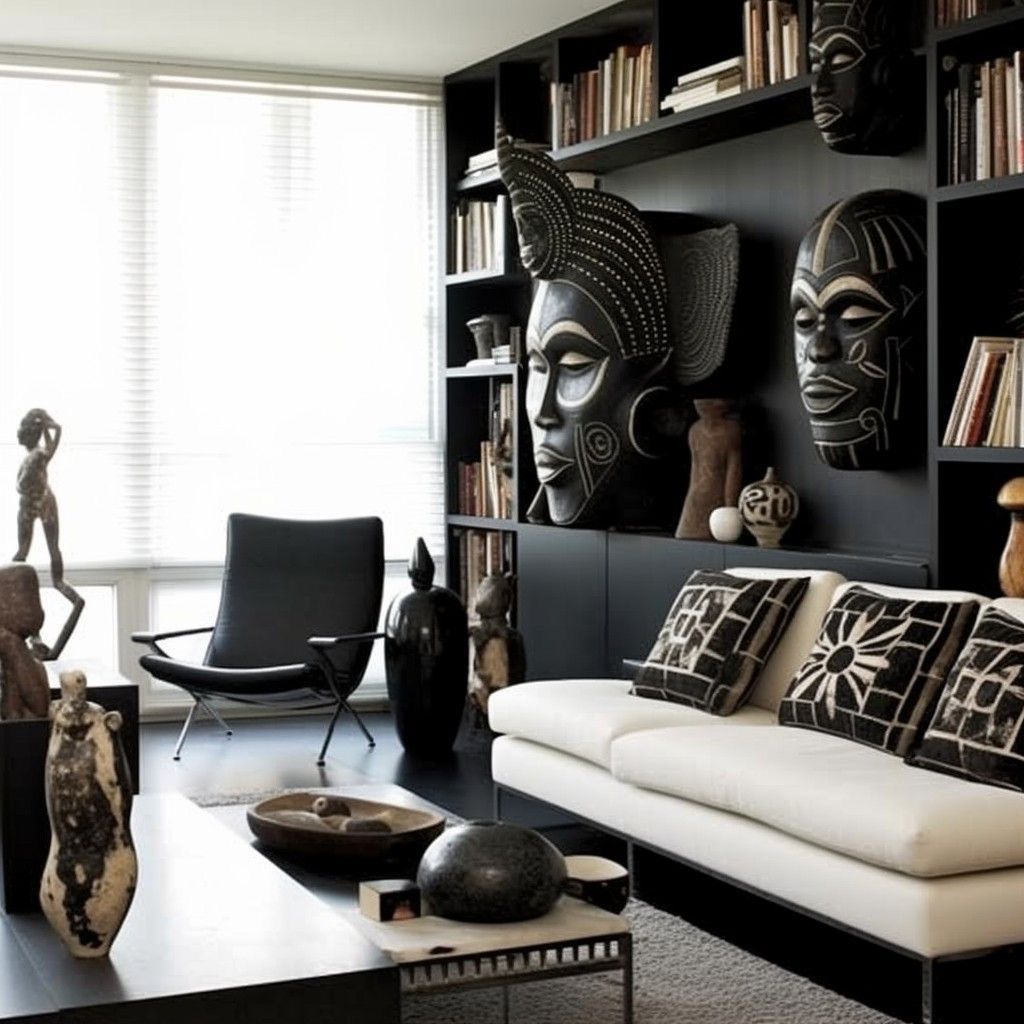
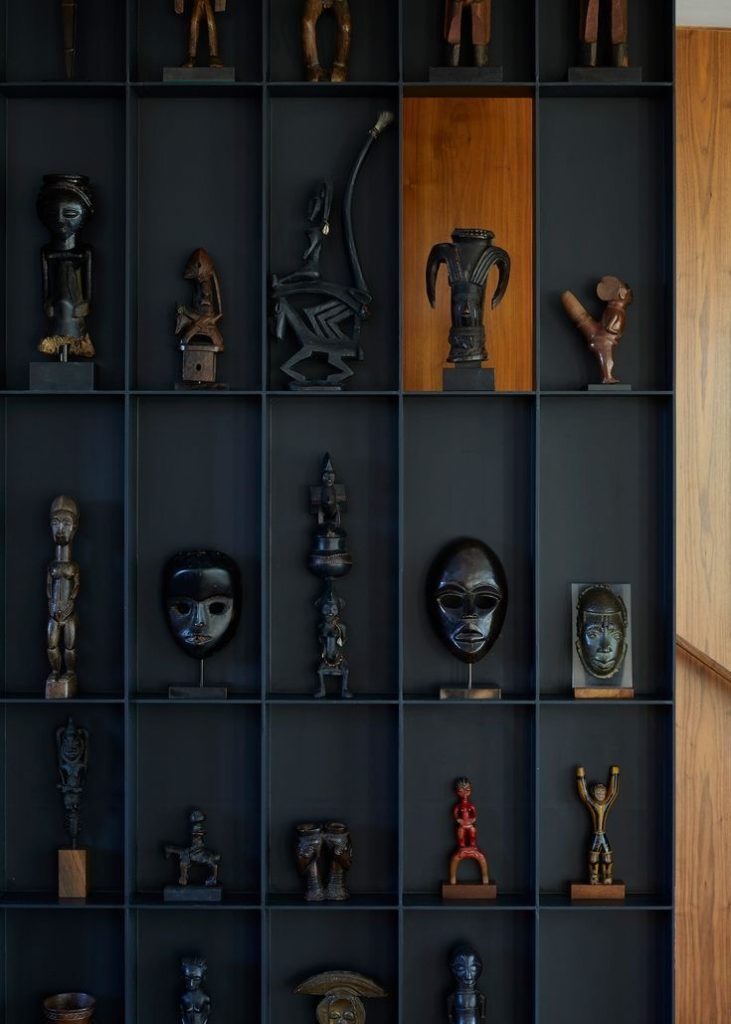
- Less, But Better: Instead of filling a shelf with many small trinkets, choose one or two statement pieces. A beautiful Ethiopian black pottery vase. A striking Shona sculpture from Zimbabwe. Let these pieces breathe and be admired.
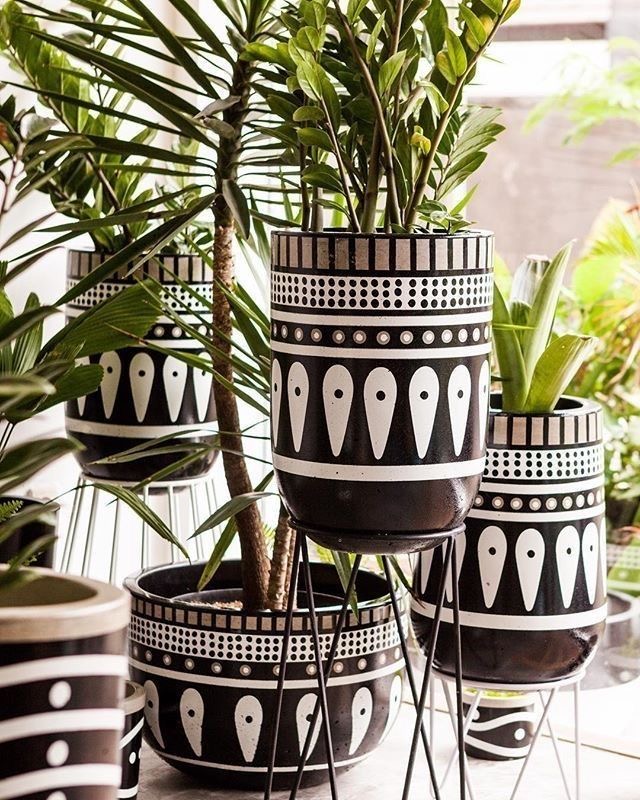
- The Living Element: Incorporate nature. A large, leafy plant (like a Monster or a Fiddle Leaf Fig) in a simple, natural pot reinforces the connection to the earth and adds life and color.
5. Light the Way: Create Atmosphere
Harsh overhead lighting is the enemy of a warm, inviting atmosphere.
- Embrace Warm Light: Use bulbs that emit a warm, golden glow (2700-3000 Kelvin), not a cold, blue-ish light.
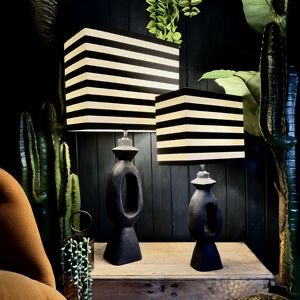
- Go Low: Use multiple light sources at different levels, floor lamps, table lamps, and even candlelight. This creates a soft, layered, and intimate glow.
- Natural Light: Allow as much natural light in as possible during the day. Use sheer, natural fiber curtains to diffuse the light softly.
Your Home, Your Story
Creating an African-inspired home isn’t about following strict rules. It’s about embracing a philosophy: a love for the earth, a respect for craftsmanship, and a desire to create a home that feels truly alive.
Start small. Maybe it’s swapping out a lamp shade for a basket light. Maybe it’s adding a single throw pillow in a beautiful Ankara pattern. Each piece you bring in is a conversation starter, a connection to a wider world of art and tradition.


Your home should be your sanctuary, a place that reflects not just where you’ve been, but who you are and what you love. Let it tell a story worth hearing.
What’s the first change you’ll make? Share your inspirations with us

Related Posts

Aisha Ayensu: The Architect of African Opulence

The Woman Who Planted a Movement: Wangari Maathai’s Story