South Africa’s War on Women: The Crisis of GBV
What is happening in South Africa is a national catastrophe of the soul, representing a systemic breakdown where the most fundamental right, the right to safety, is brutally denied to women, children, and LGBTQIA+ persons every single day. This ongoing crisis of gender-based violence and femicide (GBVF) is a heart-wrenching situation that requires urgent attention and action. We must stop viewing the statistics as mere abstract figures and recognize them as a daily, personal horror. These numbers tell the tragic story of a society failing its women.
For too long, the cries of the victims have been muffled by indifference and political inaction. The statistics represent the shattered lives of mothers, daughters, and sisters. With a femicide rate tragically estimated to be five times the global average, South Africa has become one of the most dangerous places on earth for women. This harrowing reality has sparked mass public protests, symbolized by the unified color of purple profiles across social media. This piece aims to illuminate the devastation, confront the painful truths behind it, and honor the resilient individuals demanding immediate justice.
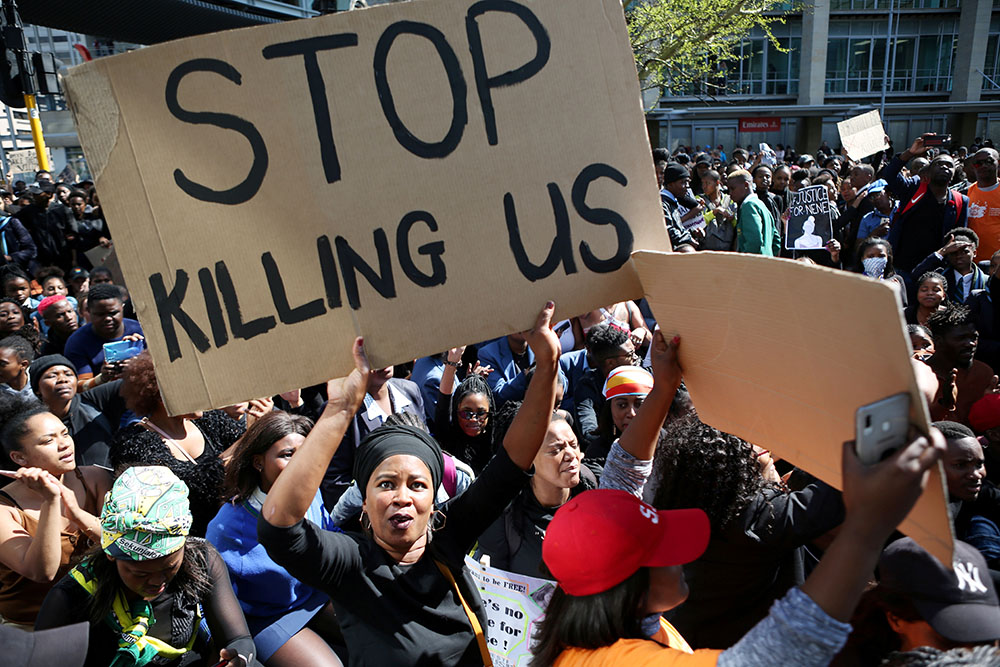
The Femicide Count, Sexual Violence, and Who Is Most Vulnerable?
The heartbreaking reality is that a woman is murdered, on average, every three to four hours. We are losing seven to nine women every single day, and most of these fatal attacks are committed by someone they trusted, like a partner, a relative, or an acquaintance. The home, the supposed sanctuary, has been turned into a battlefield.
The amount of sexual violence is staggering. Between July and September 2024, police recorded over 10,000 rapes. Think of the terror, the trauma, and the violation inherent in that number. A landmark 2024 study by the Human Sciences Research Council (HSRC) delivered the chilling message that over one-third (33%) of South African women over 18 will experience physical violence in their lives.
The violence doesn’t discriminate, but it falls hardest on those already marginalized. The same HSRC study showed that Black African women and women with disabilities face disproportionately higher risks. When a woman is poor or lacks economic independence, her vulnerability to an abuser becomes a terrifying trap; this really does highlight how poverty and inequality are weapons used to enforce control.
GBV is not always a physical attack. It is the insidious economic abuse, where a man controls the finances to isolate and starve his partner of independence. It is the constant psychological trauma and the relentless verbal degradation that strip a woman of her self-worth. These silent forms of assault often leave deeper, more lasting scars than the physical injuries.
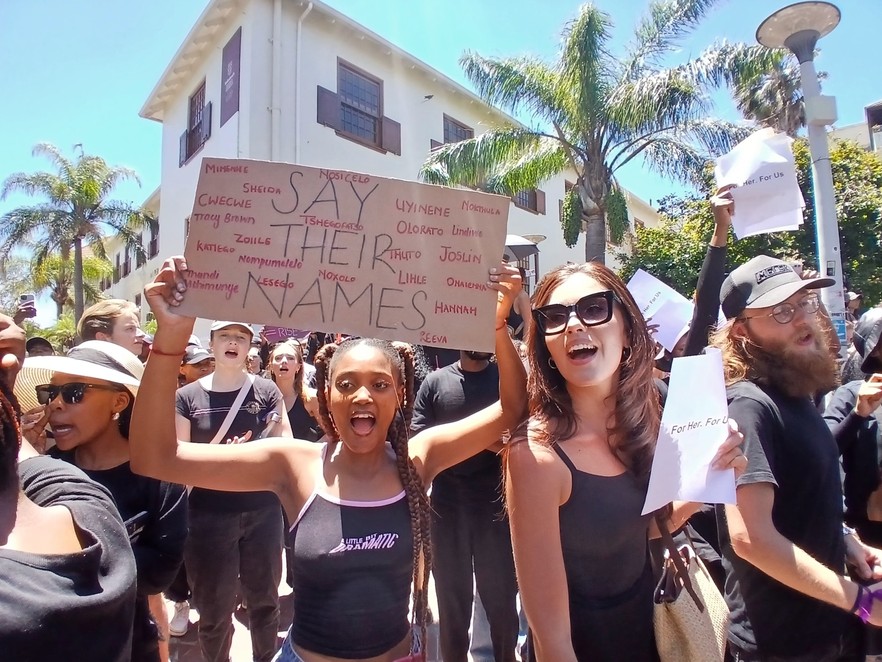
Deep Roots of the Crisis: The Trauma of History and Patriarchy
How did a democratic nation arrive at this point of crisis? The violence surely can’t be random; it is a direct inheritance of a wounded past and a pervasive, destructive present.
The decades of Apartheid were a time of sanctioned cruelty and state brutality that fundamentally shattered the social contract. This history infused South African society with a terrible normalization of aggression. Violence, once institutionalized, seeped into the communities and, tragically, into private homes, setting a dangerous precedent that trauma is answered with more trauma.
At the very foundation of this crisis lies toxic masculinity, a rigid, fear-driven view that men must dominate and control women. This destructive ideology strips women of their autonomy and teaches men that dominance, not dialogue or empathy, is the measure of their worth. Many perpetrators genuinely believe they are entitled to punish or control their partners, fostering a culture where violence is excused, or worse, accepted.
I think the most infuriating contributing factor is the failing criminal justice system. When a brave survivor finally gathers the courage to report an assault, she is too often met with secondary trauma: police officers who are apathetic, who engage in victim-blaming, or who mishandle the evidence. The painfully low conviction rates create a profound sense of impunity, sending a dangerous message to abusers: you can get away with it. This institutional failure breaks the spirit of those seeking justice and reinforces the cycle of violence.
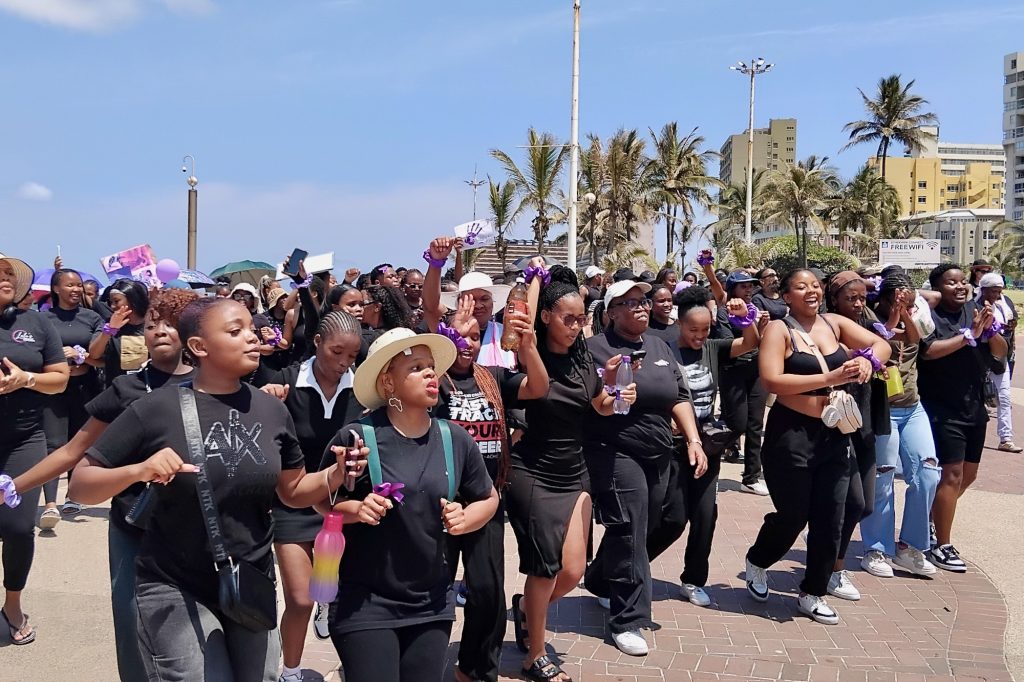
The Purple Profile and a Nation’s Cry
But despair has bred defiance. Weary of hollow promises, the nation’s civil society has risen up, creating a movement of incredible visibility and power, most notably through the “Purple Profile” campaign.
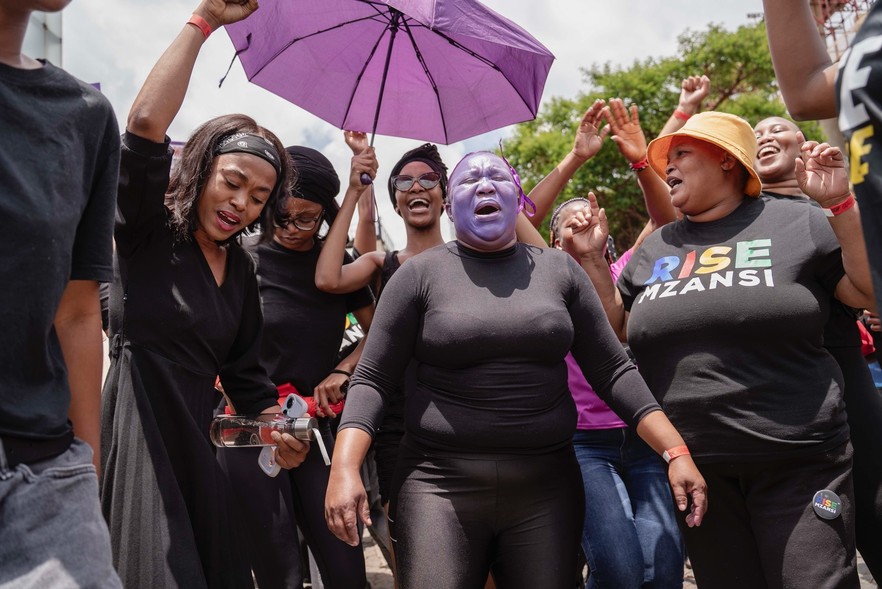
The widespread adoption of purple profile pictures is a poignant, digital expression of grief, outrage, and unwavering solidarity. Purple, the colour of dignity and justice, has become the banner under which thousands, from ordinary citizens to people all over the world, declare, Enough is enough. This digital uprising, spearheaded by courageous groups like Women For Change, ensures the national conversation can never be silenced or ignored.
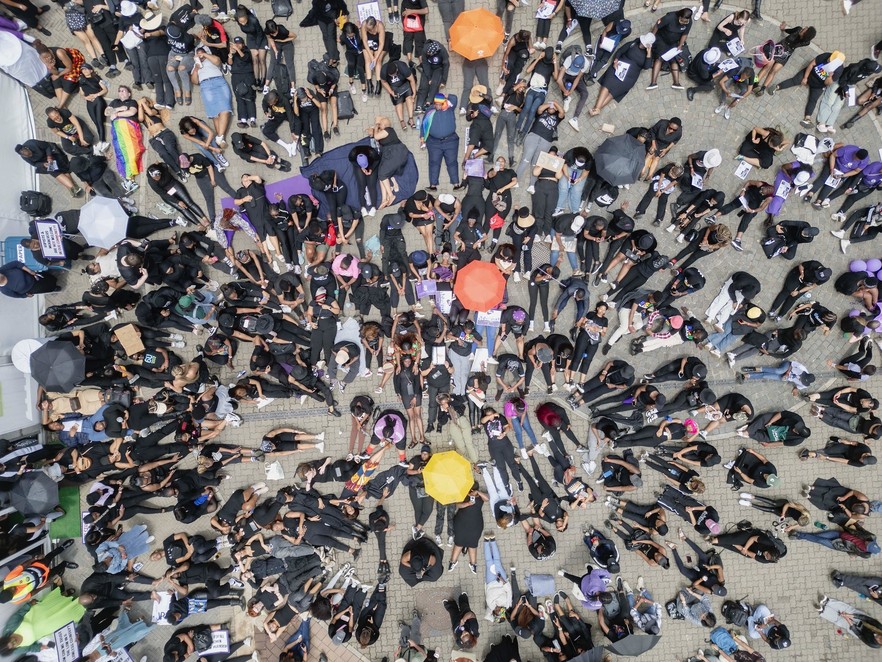
The purple movement was linked to the G20 Women’s Shutdown, a strategic strike designed to hit the nation where it notices most: its economy. Women were urged to cease all activity work, commerce, and caregiving—to show the devastating void created when women are absent, either through protest or death. The symbolic 15-minute silent lie-down was a heart-wrenching tribute, forcing the nation to pause and contemplate the horror of the lives lost.
This relentless, visible pressure achieved a landmark victory: the South African government was finally compelled to classify GBVF as a national disaster/crisis. This is a formal acknowledgement that mandates the highest level of urgency and resource allocation. This victory belongs to every activist and every person who turned their profile purple.
The National Strategic Plan: Hope on Paper
The government’s roadmap, the National Strategic Plan on Gender-Based Violence and Femicide (NSP-GBVF) 2020–2030, is the document that carries the nation’s hope. It is structured on six pillars, promising systemic change:
- Protection and Justice: The most critical legislative shifts include the Domestic Violence Amendment Act (2021/2022), which expands protections to people in dating relationships and non-intimate family dynamics, and the strengthening of the National Register for Sex Offenders. These amendments are designed to close the legal loopholes that abusers have exploited for decades.
- Healing and Support: The expansion of Thuthuzela Care Centres (TCCs)—specialized, multi-disciplinary centres for survivors, and the constant availability of the 24-hour Gender-Based Violence Command Centre (GBVCC) are essential lifelines in a moment of utter despair.
- Prevention and Power: The long-term, arduous work involves engaging men and boys to dismantle toxic masculinity and empowering women economically. Only when women have the financial security to leave an abusive situation can they truly begin to control their own destiny.
Conclusion: The Demand for a New Dawn
South Africa’s battle against GBVF is a moral reckoning. The road ahead is long, but the tide is beginning to turn. The purple profiles are a digital reminder that the world is watching, grieving, and demanding justice.
The implementation of the NSP-GBVF must be robust, funded, and free from the corruption and apathy that have plagued past initiatives. The measure of success will not be the elegance of the law, but the safety of a young woman walking home at night, the swift justice delivered in a courtroom, and the day a mother does not have to fear for her daughter’s life.
South Africa deserves to be defined by its resilience, its beauty, and its democracy, not by the horrific violence perpetrated against its women. The demand, loud and clear, is for a new dawn where every South African can live, love, and thrive without fear.